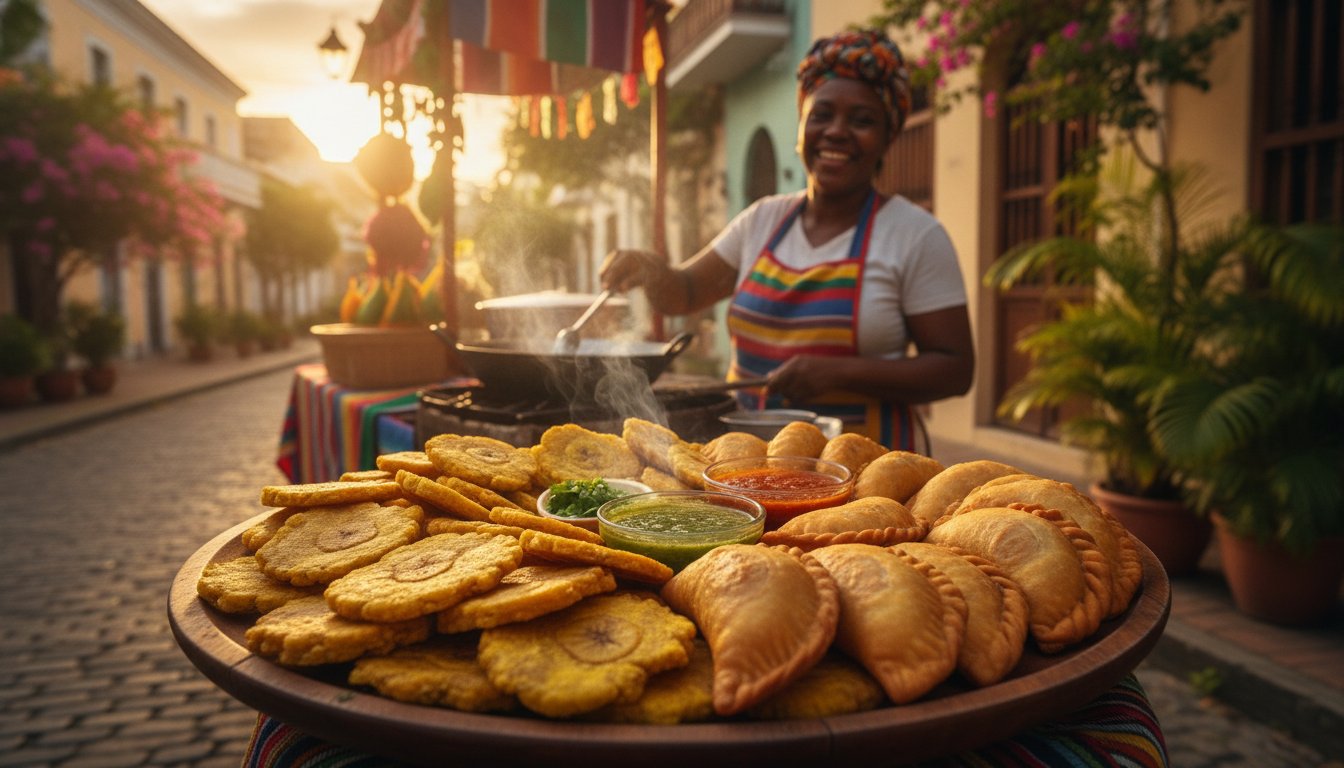
What if the golden, crispy empanada in your hand was actually a 500-year-old map of the world? It’s so much more than just a quick snack on the go! You might feel overwhelmed when you look at a traditional menu or wonder why our flavors feel so different from other Latin cuisines. We totally understand. It’s easy to miss the deep stories hidden inside a steaming tamale or a perfectly fried patacon when you don’t have the context. You deserve to know the REAL story behind every bite!
That’s why we’re diving deep into the history of Panamanian street food to show you the soul behind the sizzle. You’re about to discover a five-century journey that started with ancient indigenous corn traditions and evolved into the incredible global fusion we celebrate today. We’ll explore the historical staples you MUST try and give you the confidence to order like a local expert. Get ready to see Panama through its vibrant flavors; it’s going to be an AMAZING ride!
Key Takeaways
- Uncover how ancient corn and yuca traditions from indigenous roots still define every crispy bite you enjoy today!
- Trace the 500-year history of Panamanian street food to see how Spanish, African, and Caribbean cultures merged into one incredible flavor profile!!!
- Discover why the humble neighborhood fonda is more than just a place to eat; it is the vibrant, beating heart of our community!
- Gain total confidence in ordering classics like tamales and patacones by understanding the regional stories and agricultural history behind them.
- Find out why the concolon at the bottom of the pot is actually our most prized culinary treasure and the ultimate symbol of national pride!
Pre-Colonial Foundations: The Indigenous Origins of Panama’s Street Eats
Long before the first fonda opened its doors, the seeds of our culinary identity were planted in the rich soil of the Isthmus. To understand the history of Panamanian street food, you have to look at it as a beautiful, centuries-old fusion of Indigenous, Spanish, African, and Caribbean cultures! It’s a flavor profile that didn’t just happen; it was crafted with love over 500 years. Our ancestors relied on what we call the “Holy Trinity” of ancient Panama: Corn, Yuca, and Cacao. Indigenous groups like the Chibchan and Chocoan were the original street food masters. They used open-fire pits to roast fresh ingredients, creating the first “fast food” for travelers crossing our land bridge. Masa is the foundational dough made from ground corn that has survived for millennia as the heart of our kitchen.
The Power of Corn and the First Tortillas
If you’ve ever tried a Panamanian tortilla, you know they aren’t like the thin ones you find in other countries. Ours are thick, golden, and incredibly satisfying! This hearty texture comes from the ancient process of nixtamalization. We soak and cook the corn in an alkaline solution, which makes it easier to digest and much more durable. In ancient times, corn was the primary energy source for travelers crossing the Isthmus because it was portable and filling. Imagine the smell of woodsmoke and roasting corn wafting through the tropical air centuries ago. It’s the ultimate survival food that turned into a national treasure you can still enjoy on every street corner today!
Root Crops: Yuca and the Birth of the Carimañola
Yuca, or cassava, is another superstar of our heritage. It’s a tough, drought-resistant staple that fed early Panamanian communities even when other crops might fail. While it started as a simple boiled root, it eventually evolved into the crispy, stuffed delights we love so much. This humble root is the reason we have the carimañola, a silky yuca dough stuffed with savory meat and fried to perfection. Root crops remain the backbone of authentic Panamanian street food today because they offer a satisfying crunch you just can’t find anywhere else. Exploring the deep roots of Panamanian cuisine shows us that our love for fried gold started with these simple, earth-bound ingredients. When you dive into the history of Panamanian street food, you realize that every bite of a modern-day fritura is a tribute to those ancient, ingenious cooks who knew exactly how to turn the land’s gifts into a feast!
A Melting Pot on the Move: How Global Migrations Shaped the Menu
Panama isn’t just a piece of land; it’s a vibrant bridge where the whole world meets for lunch! Because our geography made us a natural crossroads, people from every corner of the globe have been passing through for centuries. They didn’t just bring their luggage; they brought their recipes, their spices, and their souls. This constant movement is exactly why the history of Panamanian street food is so incredibly diverse and exciting. When you walk down a busy street today, you aren’t just smelling lunch. You’re smelling a 500-year-old story of global migration that turned our little Isthmus into a culinary powerhouse!
The Spanish Legacy: Frying and Spices
When the Spanish arrived, they changed our kitchens forever by introducing cattle and pork. But the real revolution happened when they brought lard! Suddenly, the art of the “fritura” was born. Deep-frying became the star of public markets, turning humble ingredients into golden treasures. We were clever, though. We took the concept of the Spanish empanada and adapted it to our land. Instead of using wheat, we used our ancient corn masa to create a crunch that’s uniquely ours. Mediterranean spices like oregano, cumin, and paprika also started appearing in our stews, adding a rich complexity that is foundational to the culinary history of Panama. These flavors became the building blocks for the savory snacks we still love today.
Afro-Panamanian Soul: Seafood and Heat
Our Afro-Caribbean ancestors brought the rhythm and the fire to our plates! They introduced the magic of coconut milk, curry, and bold spice profiles that transformed local ingredients. Have you ever tried “Sao”? These pickled pig’s feet are a legendary street staple with deep Caribbean roots that offer a tangy, spicy kick like nothing else. In the old days, coastal flavors moved inland thanks to hardworking traveling food vendors who carried these traditions in their carts. They also brought equivalents of the habanero and scotch bonnet peppers, which gave birth to the spicy “chombo” sauces that every local keeps on their table. This influence is the reason our seafood dishes have that unmistakable island soul!
The 19th-century Canal era added even more layers when Chinese laborers arrived. They introduced “Jampao” (steamed pork buns) and “Shumai” (meat dumplings) to our local palate, and we embraced them instantly. Today, these are essential parts of a traditional Panamanian breakfast! Because Panama has always been a place of transit, street food became the most efficient way to eat while on the move. It’s fast, it’s portable, and it’s a delicious map of our shared heritage. If you want to experience this global fusion in person, come taste our authentic Panamanian street food and join the celebration!
The Rise of the Fonda: How Neighborhood Eateries Became Cultural Landmarks
The fonda is so much more than just a place to grab a quick bite! It’s the beating heart of our neighborhoods and the true keeper of our cultural secrets. ¡It is where the soul of Panama truly lives! If you want to understand the history of Panamanian street food, you have to look at how these spots evolved. They started as simple roadside stalls where travelers could find a warm meal. Over time, they grew into permanent fixtures that anchor our communities. These are the places where the magic happens! Every fonda has its own personality, but they all share one thing: a deep love for the flavors that make us who we are.
One of the most important historical standards born in these kitchens is the “Almuerzo Ejecutivo” or Executive Lunch. Don’t let the name fool you; it’s not for corporate boardrooms! It was created as a hearty, affordable way to feed the working class. A big plate of rice, beans, a protein, and tajadas (fried plantains) gave workers the energy they needed for the day. This tradition turned “street food” into a daily necessity that eventually became a source of massive national pride. ¿Ready to try a plate?
The Social Fabric of Street Dining
Walking into a fonda feels like joining a family party! The unpretentious atmosphere is part of the history. We’re talking about bright plastic chairs, loud salsa music, and the constant hum of conversation. These eateries served as town squares where people from all walks of life gathered to debate politics or share local news. It’s a space where formal barriers disappear. You don’t need a tie to eat here; you just need an appetite and a smile! Street food transformed from a basic necessity into a vibrant symbol of our national identity.
Authenticity and the ‘Abuela’ Factor
The real secret to the best traditional Panamanian food is the “Abuela” factor. For generations, women have been the primary guardians of our culinary heritage. They didn’t write recipes down in fancy books. Instead, they passed them from mother to daughter through touch, smell, and taste. This “home-cooked” flavor is the gold standard for any street food stall. Long before “local sourcing” was a trendy buzzword, our fondas were already doing it. They used fresh ingredients from small neighborhood suppliers because that’s what was available and best. This commitment to local flavors is why every spoonful of sancocho or bite of an empanada tastes like home. It’s a legacy of love that we are so proud to share with you today!

The Evolution of Classics: Tamales, Empanadas, and the Art of the Patacón
These dishes are the absolute icons of our streets! They represent the heart and soul of the history of Panamanian street food, evolving over centuries from sacred family recipes into the snacks we crave every single day. While many of these flavors started in the countryside, they found their true rhythm in the bustling markets and roadside stalls. You can taste the story of our people in every crispy edge and every steaming leaf. It is a journey of transformation that turns simple, local ingredients into national treasures!
Tamales: A Culinary Time Capsule
Tamales used to be reserved only for big holiday tables, but they were just too good to keep for once a year! Today, they are a beloved daily street snack that brings people together. The secret is the bijao leaf. It isn’t just a wrapper; it’s a flavor infuser that gives the corn masa its unmistakable earthy aroma and helps preserve the food in our tropical heat. Creating a Panamanian tamale is a precise, multi-step journey that requires seasoned corn masa and tender meat to be perfectly bundled inside fresh bijao leaves before being slow-steamed to perfection. Across our provinces, the masa changes flavor based on local spices and traditional secrets. It remains a beautiful symbol of community effort because making them is always better when the whole family helps out!
The Patacón: Simple, Fried, and Essential
You can’t talk about our food without mentioning the mighty patacón! This humble green plantain made a long journey from Africa to become our nation’s favorite side dish. The magic is all in the “twice-fried” technique. We fry them once to soften the heart, smash them flat, and then fry them again to create that legendary golden crunch. Texture is everything in street food, and nothing beats a hot patacón right out of the oil! While they are perfect with just a sprinkle of salt, modern street vendors are getting creative. You’ll see them topped with savory shredded beef or even fresh, zesty ceviche. It’s a versatile classic that never goes out of style.
Our empanadas also tell a story of regional pride. The various fillings, like seasoned ground meat, shredded chicken, or salty white cheese, reflect the agricultural history of our different provinces. In the cattle-rich lands, meat is king; in the dairy regions, cheese reigns supreme! This variety is what makes exploring our flavors so exciting. If you want to taste these legends for yourself, come try our hand-crafted Panamanian Empanadas and Tamales today. You won’t just be eating a meal; you’ll be tasting five centuries of tradition!
Concolon and Beyond: Why Street Food Is the Heart of Panamanian Identity Today
Did you know that the most famous part of our national meal was actually a happy accident? It’s true! In every Panamanian kitchen, there’s a secret prize waiting at the very bottom of the rice pot. We call it Concolon. This crispy, toasted layer of rice tells a beautiful story of patience and survival. It is the ultimate symbol of our national resilience. We don’t throw things away; we turn them into gold! This spirit is exactly what drives the history of Panamanian street food today. It’s about taking humble, everyday ingredients and making them something extraordinary that people will fight over.
Concolon: The Prize at the Bottom of the Pot
Achieving the perfect Concolon is a true science that requires a perfect balance of heat, oil, and time. You can’t rush greatness! If the flame is too high, it burns; if it’s too low, it stays soggy. But when you get it just right, you get that deep, nutty crunch that makes your heart sing. Every Panamanian child grew up fighting their siblings for those “crispy bits” at the end of lunch. It’s a core memory for all of us! We’ve taken this humble tradition and elevated it into a signature dining experience. We want you to feel that same excitement every time you hear that crunch.
We’re currently witnessing an amazing modern renaissance. Panamanian street food is finally getting the spotlight it deserves. It is moving from the simple roadside stalls of the past into cozy, dedicated restaurant spaces. This shift allows us to share our culture with even more people in a way that is both authentic and welcoming. ¡It’s an exciting time to be a food lover in Panama!
The Future of Tradition
Our mission at Concolon Panamanian Street Food Restaurant is to keep that “street” soul alive while giving you a comfortable place to relax and enjoy. We believe that using fresh, locally sourced ingredients is the only way to truly honor the ancestors. We source from small, independent suppliers because that’s how it’s been done for 500 years. This isn’t just about a menu; it’s about respect for the history of Panamanian street food and the journey that brought these flavors to your plate. When you eat with us, you’re part of that continuing story.
- Freshness: Every ingredient is picked for its quality and local roots.
- Authenticity: We use the same techniques passed down through generations.
- Community: We support the small farmers who keep our traditions alive.
You are more than just a guest; you’re part of our family now! We invite you to come and taste this history for yourself at our table. Let the smells of roasting corn and frying plantains take you on a journey through time. We can’t wait to show you why our street food is the true heart of our identity. ¡Come hungry and leave with a full heart!!!
Experience the Soul of Panama at Your Own Table!
You’ve traveled through five centuries of flavor! From the ancient corn traditions of our indigenous roots to the global fusion that defines our busy streets today, you’ve seen how our cuisine is a living map of the world. Every crispy patacon and steaming tamale is a tribute to the resilience and joy of our people. By understanding the history of Panamanian street food, you’re no longer just a diner; you’re a part of our ongoing story. The journey from roadside stalls to the modern fonda proves that our flavors only get better with time!
We are so proud to be an independent, owner-operated spot where we honor these traditions every single day. Our cozy atmosphere is the modern evolution of the classic fonda, designed to make you feel right at home. Whether you’re here for our signature Concolon or a plate of golden empanadas, we promise a warm, sensory-rich experience that celebrates our heritage. Don’t just read about it; come live it!
Come taste the history of Panama at Concolon Restaurant. Book your table today!!!
We can’t wait to welcome you to our table and share the magic of our kitchen with you. ¡See you soon!
Frequently Asked Questions
What exactly is Concolon in Panamanian cuisine?
Concolon is the golden, crispy layer of toasted rice that forms at the very bottom of the pot during the cooking process. It is a beloved, crunchy staple in the history of Panamanian street food! While it might look like a kitchen accident to some, locals consider it the most flavorful prize of the meal. At our restaurant, we serve it as a signature dish combined with savory spices and your choice of beef or chicken. You simply have to try it!
Is Panamanian street food spicy like Mexican food?
Our food is generally not spicy in the way Mexican cuisine is known for. Instead, we focus on deep, savory flavors using herbs like culantro and mild peppers. While we love a good “chombo” hot sauce on the side, the base dishes are mild and family friendly for everyone to enjoy. You’ll find that our heat comes from passion and seasoning rather than just burning your tongue! It is all about that perfect balance of salt and spice.
What are the most common ingredients in Panamanian street eats?
You will find that corn, yuca, and plantains are the true stars of our menu! These ancient staples are used to create everything from thick tortillas to crispy patacones. We also rely heavily on fresh, locally sourced ingredients like rice, beans, and culantro to give our dishes their signature soul. Meats like shredded beef and chicken are slow cooked to perfection, ensuring every bite of our street food is as hearty and satisfying as it is delicious!
Why is corn more common than wheat in Panamanian empanadas?
Corn has been our foundational crop for thousands of years, long before wheat was ever introduced to the Isthmus. Because corn grows so well in our tropical climate, it became the natural choice for our ancestors. This indigenous tradition is a huge part of the history of Panamanian street food. Using corn masa gives our empanadas a unique, hearty crunch and a golden color that wheat flour just cannot match. It is the authentic taste of our heritage!
What is a ‘fonda’ and why should I visit one?
A fonda is a traditional, unpretentious neighborhood eatery that serves as the social heart of our communities. You should visit one because it is where you will find the most authentic, home cooked flavors at a great value! These spots offer a festive atmosphere where you can enjoy a hearty “Almuerzo Ejecutivo” alongside locals. It is the best way to experience the genuine warmth and vibrant culture of Panama through its most beloved and traditional everyday dishes.
How did Afro-Caribbean culture influence Panama’s food history?
Afro-Caribbean influence brought a rhythmic explosion of flavor to our plates! This heritage introduced us to the magic of coconut milk, curry, and bold spice profiles that transformed our local seafood. Dishes like “Sao” and our spicy sauces would not exist without this vibrant cultural legacy. This influence moved from the coasts to the heart of the country, adding a layer of island soul that makes our street food stand out from any other Latin cuisine today!
What is the best tropical drink to pair with Panamanian street food?
Nothing beats a cold, refreshing tropical drink when you are enjoying hot frituras! We highly recommend pairing your meal with a fresh fruit chicha or a creamy Piña Colada to balance the savory flavors. These drinks are made from the sweetest local fruits, providing a burst of sunshine in every sip. Whether it is pineapple, passion fruit, or tamarind, a chilled drink is the perfect companion for a plate of hot patacones or our signature tamales!
Are Panamanian tamales different from those in other Latin countries?
Yes, they are incredibly unique! While many countries use corn husks, we wrap our tamales in fresh bijao leaves, which adds a distinct earthy aroma to the masa. Our dough is also seasoned with a specific blend of local spices and often includes surprises like olives or raisins for a sweet and savory contrast. This labor intensive process makes our tamales a true culinary time capsule that you will not find anywhere else in the world!
Leave a Reply