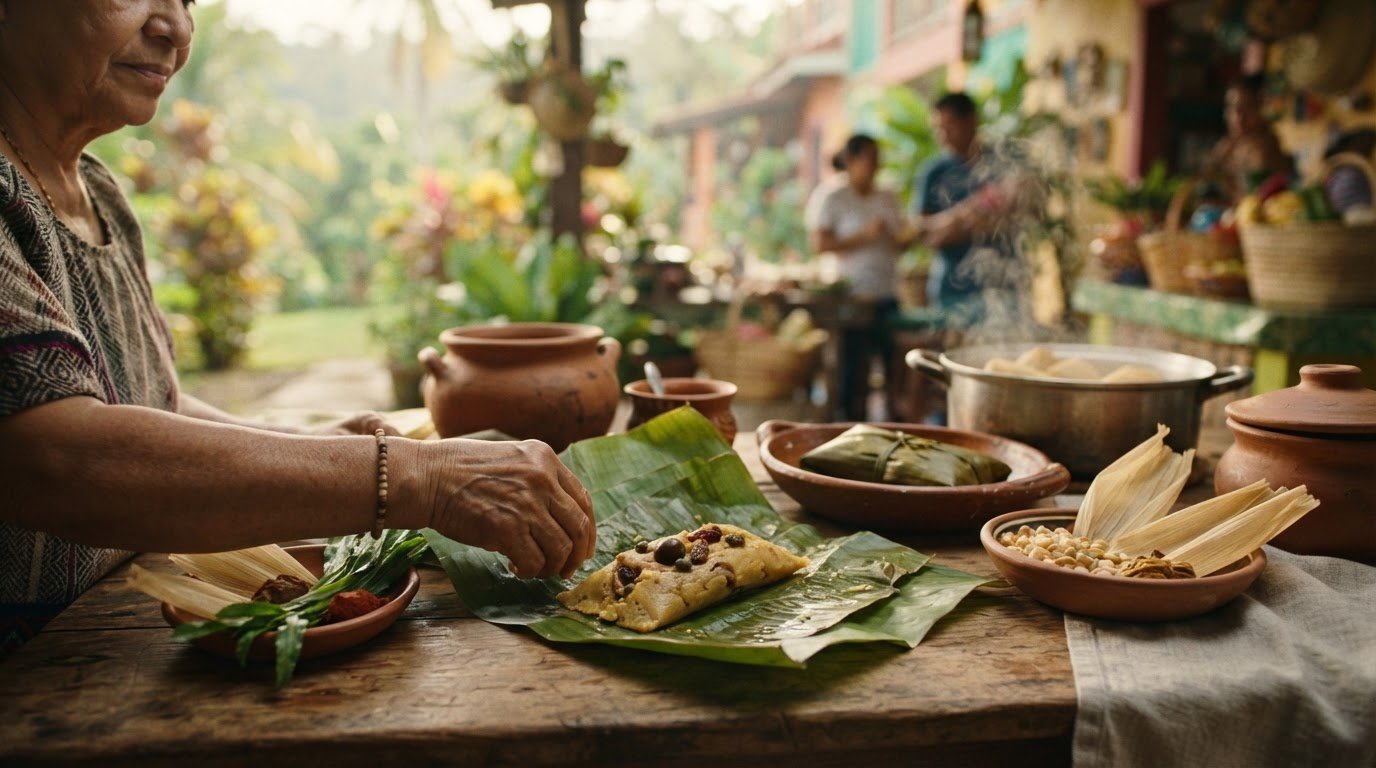
What if the story of a Panamanian tamal is less about one clear origin and more about layers of history? The history of tamales in Panama reaches back to Indigenous maize traditions, then reflects generations of cooking and cultural exchange. Familiar ingredients and wrapping styles offer clues, but they don’t tell the whole story, and tamal traditions across Latin America shouldn’t be treated as interchangeable.
If you’ve found conflicting origin stories or wondered what makes Panama’s tamales distinct, the key is to separate broad regional context from claims about specific local preparations. This guide explores what is known about maize’s place in Indigenous foodways, what may have changed over time, and where details about Panama’s traditions remain uncertain.
You’ll also see how to compare tamal preparations by ingredients and cooking method without assuming every community makes them the same way. Then we’ll connect that history to the corn and meat tamales enjoyed in Panama today, including those served at Concolon. A little context can make each bite more meaningful.
Key Takeaways
- The history of tamales in Panama is best understood through local evidence, not a single origin story applied across Latin America.
- Maize connects tamales to wider Indigenous foodways, but broad regional context is different from Panama-specific documentation.
- Compare Panamanian tamal descriptions by ingredients, wrapping, and preparation, while keeping the limits of the evidence in mind.
- Tamal traditions have changed over time, but there is no basis for assuming every household adopted the same ingredients or practices.
- Tamales remain part of contemporary Panamanian food culture, even as preparations and occasions vary.
What Is the History of Tamales in Panama?
The history of tamales in Panama is not one simple origin story. A tamal is generally a prepared food made with maize dough or another maize-based mixture, wrapped or contained, then cooked. That description is a useful starting point, not a universal recipe. Ingredients, wrappers, names, and methods differ across communities, including within Panama.
To understand Panama’s place in the story, follow three threads: maize and its role in foodways, cultural exchange over time, and how households adapt cooking practices. The history of the tamal offers broader regional context and describes Panamanian forms. It cannot, on its own, establish when particular ingredients or methods became common in Panama.
What makes a tamal a tamal?
A tamal is a cooked food commonly made with maize, prepared in a wrapper or another cooking vessel. The wrapper and filling are not fixed. Some versions are wrapped before cooking; others are cooked together in a pot. This broad definition helps identify the shared idea without treating one country’s preparation as the standard for all.
When comparing tamales, look at the details separately: the maize mixture, filling, wrapper, and cooking method. A familiar ingredient or technique can suggest a connection, but it does not establish exactly where a dish began or when a particular version took shape. Names can also vary, so similar-sounding foods should not automatically be assumed to have identical histories.
Why Panama’s story needs its own context
Panama’s food traditions developed in their own geographic and historical setting. Similarities with tamales elsewhere in Latin America may reflect shared maize-based foodways or cultural contact, but they do not prove that Panama’s versions followed the same timeline or path. Cultural exchange is a useful way to frame questions, not a shortcut to a single explanation.
This guide separates broad regional context from claims that can be supported specifically for Panama. When local evidence for a date, origin, or change is limited, it is better to say so than to present a popular retelling as settled fact. For a wider look at dishes and influences that shape Panamanian food, explore this guide to Panamanian street food. Next, we’ll look at maize and the roots that connect tamales across the region.
Maize, Indigenous Foodways, and the Wider Roots of Panamanian Tamales
Maize is central to understanding the wider story of tamales, but it does not provide a shortcut to a precise origin story for Panama’s versions. Maize was domesticated in the Americas and became a foundation for many Indigenous foodways. In a 2002 study published in Proceedings of the National Academy of Sciences, Matsuoka and colleagues used genetic evidence to support a single domestication of maize in Mexico. That finding helps explain the crop’s deep regional history. It does not date the arrival of tamales in Panama or identify who first made them there.
Maize and the broader tamal tradition
Across parts of Latin America, cooks have shaped maize into foods that are wrapped, contained, or cooked with fillings. The shared use of maize points to a broad culinary connection, not a single inventor or uniform recipe. Similar preparations can emerge, travel, and change through contact between communities. A familiar ingredient or cooking method alone cannot show when a Panamanian tamal took its present form.
The evidence supports maize’s deep importance across the Americas and its place in Panama’s tamal tradition, not one confirmed date or inventor for the Panamanian tamal. Keep that distinction in mind when evaluating origin claims. Evidence for maize’s wider history is not automatically evidence for a particular Panamanian recipe or timeline.
What can be said about Indigenous influences in Panama?
Indigenous foodways are essential context, but they should not be collapsed into one shared culture. Panama has distinct Indigenous communities, and identifying a specific community as the source of a particular tamal practice requires evidence that directly supports the connection. Without that evidence, assigning the dish to a named group would go beyond what can responsibly be claimed.
Indigenous cooking should not be described as frozen in time. Food practices change as people adapt ingredients, tools, and methods within their communities and through contact with others. For Panama’s tamales, distinguish broad context from documented local detail: maize has deep Indigenous roots in the Americas, while the precise dates and pathways by which particular tamal forms developed in Panama remain uncertain.
That uncertainty makes it useful to ask better questions: which records describe local preparations, and how do those accounts compare with present-day practices? Today, Concolon serves corn and meat tamales as part of its Panamanian street-food offering. You can explore Concolon’s tamales as a present-day example, without assuming its menu represents every historical or regional tradition.
How Panama’s Tamales Differ Across Regional and Cultural Traditions
Panamanian tamales are not one fixed recipe. Descriptions of the country’s food traditions distinguish a wrapped tamal de hoja from a pot-cooked tamal de olla. The available evidence does not establish how consistently those forms vary by region or household. The comparison below summarizes reported details and flags where more local documentation is needed.
Ingredients, wrapping, and preparation: what varies?
| Form | Ingredients reported | Wrapping or preparation | What the details establish |
|---|---|---|---|
| Tamal de hoja | Corn dough, commonly with chicken or pork filling; some descriptions mention seasonings and additions such as olives or raisins. | Reported as wrapped in banana or plantain leaves and cooked. | These are reported characteristics, but they do not show how widely each ingredient is used or establish a single standard recipe. |
| Tamal de olla | Corn mixture and filling; specific ingredients can vary by recipe. | Described as cooked together in a pot and served without a leaf wrapper. | The form is identified, but more evidence is needed to establish its regional distribution or frequency in households. |
| Household preparations | Not established by the evidence summarized here. | Ingredients, wrapping, and cooking choices may differ, but no specific household pattern can be confirmed from the available material. | Uncertain. Avoid treating any single recipe as universal. |
Use this as a guide to reported forms, not a ranking of authenticity. To compare two preparations, note their ingredients, wrapper, and cooking method rather than assuming one is more traditional. A restaurant menu can document what a restaurant serves today, but it cannot establish a historic recipe or represent every Panamanian preparation. The same care applies to broad Latin American comparisons: a shared maize base or leaf wrapper invites comparison, but does not prove identical recipes or histories.
Cultural exchange without a one-note origin story
Panama’s food history is often discussed through Indigenous, Spanish, and African influences. That broad context can help frame research, but it does not tell us which community introduced a particular tamal ingredient, wrapper, or technique. Without specific evidence, assigning one feature to one group turns a complex history into an unsupported claim.
Geography and household practice can shape what people cook and how they cook it, but that possibility should not be turned into a map of regional differences without reliable documentation. Tamales across Latin America share broad family resemblances, but each tradition has its own history and should not be treated as interchangeable. For the history of tamales in Panama, compare named preparations while keeping clear what is documented, what describes a current recipe, and what remains uncertain.

What Changed in Panamanian Tamal Traditions Over Time?
A trustworthy timeline does not fill gaps with a neat story. The available material supports a broad picture of tamales as maize-based foods shaped by changing ingredients and cooking practices. It does not provide dated Panama-specific records showing exactly when particular fillings, wrappers, or preparations became common. The history of tamales in Panama is best traced through what can be established and where the evidence stops.
A careful timeline: evidence before certainty
- Long before written accounts: Maize was part of Indigenous foodways across the Americas. This wider context helps explain the deep roots of maize-based dishes, but it does not establish when tamales appeared in Panama.
- Across later periods: Panama’s food culture developed through contact and change. Without dated local sources tied to tamales, claims about when specific ingredients or methods entered Panamanian preparations should remain qualified.
- In the present: Panamanian food descriptions include wrapped tamales and a pot-cooked form. These observations document how the dish is described today, not when those forms began or how every household prepares them.
A gap in the written record is not proof that a food practice did not exist. It means the claim needs more evidence, such as a dated account that clearly identifies the preparation and its context. General histories, family memories, and present-day recipes can each contribute, but they answer different questions.
Family practice, memory, and written history
Oral accounts can preserve details that formal records leave out: who taught a cook, how a family adapts a dish, or when it appears at their table. Treat them as valuable testimony from the people sharing them, not as proof that all Panamanians follow the same tradition. Written sources can establish dates or describe a particular setting, but they, too, may represent only one place or perspective.
The story of Panamanian empanadas offers a useful, limited comparison: foods become part of a national cuisine through changing practices and shared cultural meaning, not through one recipe alone. For broader context, explore this guide to Panamanian food.
For a present-day example, explore Concolon’s corn and meat tamales. One current offering does not stand in for every family’s recipe or the dish’s entire past.
Panamanian Tamales Today: A Living Food Tradition to Taste
A food tradition can carry history without staying unchanged. Ingredients, cooking habits, and occasions may shift as households pass recipes along, adapt them, or make them their own. That’s part of what makes the history of tamales in Panama worth exploring: it’s a story of food practices, not one fixed recipe shared by everyone.
What a serving of tamales can tell you
As you enjoy a tamal, notice what you can observe: its ingredients, texture, wrapper, and cooking method. These details offer a starting point for comparing one version with another. On their own, they do not prove a particular origin, cultural meaning, or historical connection.
Traditions can differ between households and communities. One person’s family recipe may carry deep memories and meaning for that family, while another household’s version may look or taste different. Both belong in a broader picture of Panamanian food culture. A tamal is one entry point, not a complete account of every community’s cooking or history.
Taste a contemporary Panamanian tamal
Concolon serves corn and meat tamales as part of its contemporary Panamanian street-food offering. The restaurant describes its dishes as prepared with fresh, locally sourced ingredients. This offers a present-day way to enjoy a familiar food without suggesting that this menu item reproduces a historic recipe or represents every local tradition.
Let curiosity lead. Ask what ingredients are in the tamal you’re enjoying, notice its texture, and consider how another version might differ. Food history feels closer when it meets the plate, but one meal cannot speak for every household or settle every question about the past.
Explore Panamanian food at Concolon.
Carry the Story Forward, One Tamal at a Time
The history of tamales in Panama connects maize-based foodways with generations of change, but it is not a single, fully documented timeline. The wider history offers useful context; Panama’s own traditions deserve local evidence and room for variation. Ingredients, preparation, and family practices can differ, so one tamal cannot represent every household or community.
That perspective makes today’s tamales meaningful, too. They are part of a living food culture, not simply a recipe preserved unchanged from the past. At Concolon, corn and meat tamales sit alongside Panamanian street-food dishes and tropical drinks. The restaurant describes its dishes as prepared with fresh, locally sourced ingredients, offering a present-day way to enjoy Panamanian food without claiming one dish tells the whole story.
Ready to continue exploring through flavor? Visit Concolon to explore Panamanian food. Bring your curiosity, enjoy what’s on the table, and keep discovering the many stories woven into Panama’s food traditions.
Frequently Asked Questions
Are tamales originally from Panama?
Tamales are not understood as originating only in Panama. They belong to a much wider tradition of maize-based foods across Latin America, with forms and histories that vary by place. Panama has its own tamal traditions, but shared ingredients or cooking ideas do not prove that all countries’ versions came from one source. A careful account recognizes the broader regional roots while looking for local evidence about how Panamanian preparations developed.
What are Panamanian tamales made of?
Panamanian tamales are commonly described as maize-based, with versions that may include meat such as chicken or pork. Wrapped preparations are associated with banana or plantain leaves, while a pot-cooked version combines the mixture and filling in a cooking vessel. Ingredients and methods can vary by recipe and household. These descriptions offer a general picture, not a definitive recipe for every Panamanian tamal.
How are Panamanian tamales different from tamales in other countries?
There isn’t one tamal style that represents every country. Panamanian descriptions include leaf-wrapped tamales and a pot-cooked version, while other places have their own doughs, fillings, wrappers, and cooking methods. Recipes may vary within Panama, too. Compare specific preparations rather than relying on broad national labels, and don’t assume a difference commonly associated with one country applies to every household there.
What role does maize play in the history of tamales?
Maize is the central ingredient in many tamales and has deep roots in Indigenous foodways across the Americas. Its importance helps explain why maize-based dishes became part of food traditions across the region. But maize’s long history does not identify the inventor of tamales or establish when a particular recipe began in Panama. It is valuable context, not proof of a precise origin date or a single path of development.
Have Panamanian tamales changed over time?
They may have changed as ingredients, cooking practices, and household traditions evolved, but a precise timeline for those changes is not established by the available evidence. Current descriptions include both wrapped and pot-cooked forms; they do not tell us exactly when either became common. Family memories can illuminate how a particular recipe has changed, but one family’s experience should not be treated as the history of every Panamanian household.
Where can I try corn and meat tamales in Panama?
Concolon Panamanian Street Food Restaurant lists corn and meat tamales among its offerings, alongside other Panamanian street-food dishes and tropical drinks. The restaurant describes its dishes as prepared with fresh, locally sourced ingredients. A serving offers a present-day way to enjoy tamales in Panama, not a recipe that represents every household or proves how the dish was prepared historically.
Leave a Reply