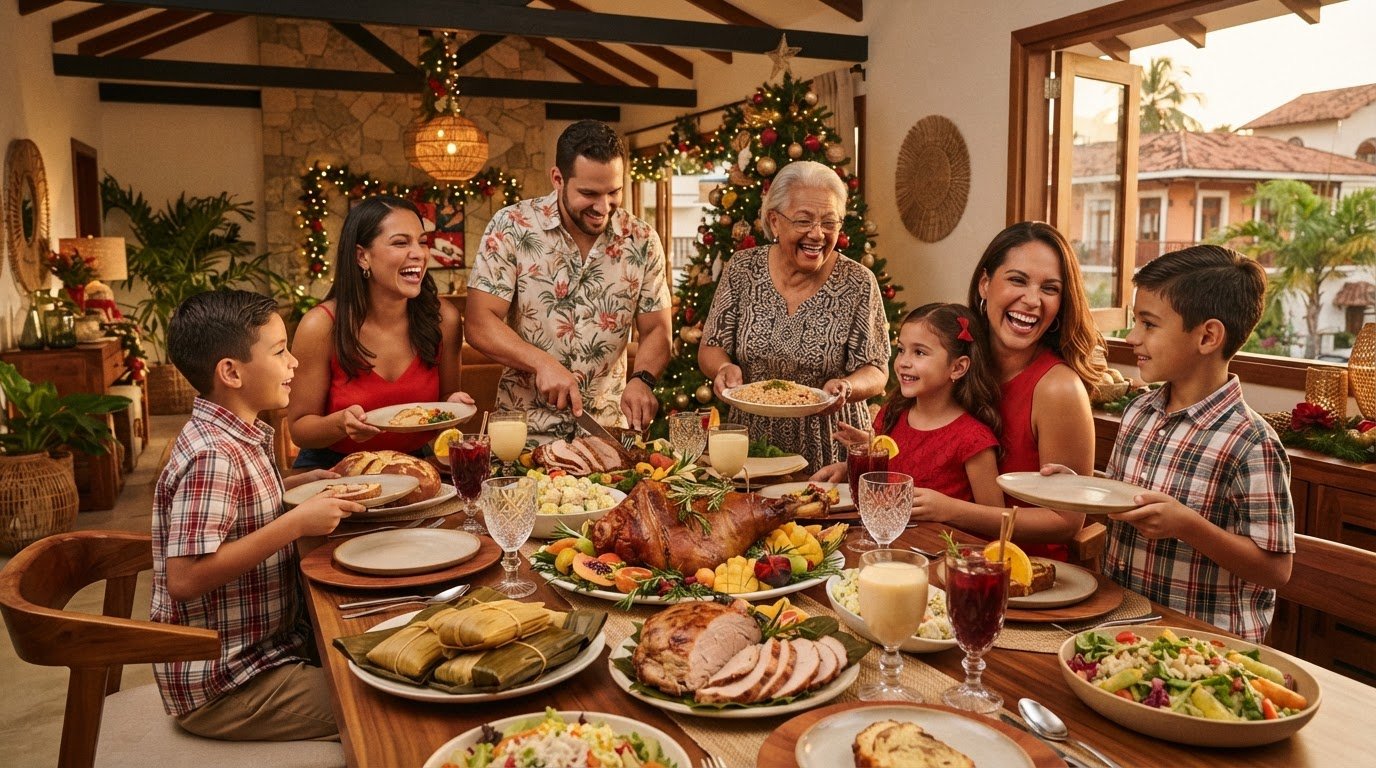
Panamanian Christmas dinner isn’t one fixed menu. It’s a festive table shaped by family recipes, preferences, and memories. Traditional Panamanian Christmas food often includes roasted ham, turkey, or pork leg with rice and pigeon peas, tamales, and potato salad. But no single list applies to every household. If you’ve wondered which dishes are associated with Christmas in Panama, the variety is part of the story, not a reason to second-guess your menu.
Some families add sweet holiday bread, fruitcake, or a glass of creamy rum punch or spiced hibiscus drink. Others keep the meal simple or bring cherished family dishes to the table. In this guide, you’ll find foods commonly linked with Christmas, the ingredients and traditions behind them, and ways menus can differ between families. You’ll also get practical ideas for choosing dishes that work together, whether you’re recreating familiar flavors or introducing them to guests for the first time.
Key Takeaways
- Traditional Panamanian Christmas food is a flexible festive spread. Family menus can differ rather than follow one fixed list.
- Learn which dishes are commonly associated with Christmas and why no ingredient or recipe should be treated as a universal tradition.
- See how festive foods can fill different roles on the table, from centerpiece to side, snack, or sweet.
- Use a practical approach to choose a main dish, add complementary sides, and account for guests’ preferences and dietary needs.
- Explore Panamanian flavors beyond holiday meals, including tamales, empanadas, patacones, and Concolon.
What Makes Traditional Panamanian Christmas Food Special?
Panamanian Christmas food is a flexible collection of festive dishes shared during the holiday, shaped by household traditions rather than one fixed menu. A meal often brings together a main meat, filling sides, and foods made for sharing. A Christmas table may include roasted ham, turkey, or pork leg alongside rice with pigeon peas, tamales, or potato salad, but families choose and prepare dishes in their own ways.
That variety reflects the broader character of Panamanian cuisine, with culinary influences and ingredients that come together across the country. At Christmas, familiar flavors can take on special meaning. A dish may return each year because it’s part of a family recipe, a shared memory, or simply a favorite everyone looks forward to.
Is there one traditional Panamanian Christmas menu?
No. Traditions and menus differ between households, so there isn’t one required combination that defines a proper celebration. Roasted ham, turkey, and pork leg are commonly associated with the holiday meal, as are rice with pigeon peas, tamales, and potato salad. These are familiar options, not a checklist every family follows.
One household might make a well-loved side central to its holiday preparations; another might choose a different main dish or add recipes treasured by relatives. Even when families serve the same food, ingredients and preparation can vary. It’s more accurate to think of traditional Panamanian Christmas food as a recognizable set of festive possibilities than as a single national menu.
How does the holiday table bring people together?
A festive meal gives family and guests a reason to gather, pass dishes around, and enjoy flavors connected to the season. Shared sides and foods prepared for several people make the table feel abundant and welcoming. The pleasure is in the warm, savory aroma of a main dish, the colors of the sides, and the conversation around them.
Some preparations, including tamales, can take time and involve family participation, though customs vary. No one dish needs to be present for a meal to feel meaningful. Think of the table as flexible: choose foods that suit the people gathering, honor the traditions that matter to your family, and leave room for a new favorite.
Which Dishes Are Commonly Associated with Christmas in Panama?
There’s no required holiday menu, but some dishes appear often in descriptions of Panamanian Christmas celebrations. Roast ham, turkey, or pork leg, arroz con guandú, tamales, potato salad, and festive sweets are commonly associated with Christmas in Panama, though family tables differ. Together, these dishes offer savory, hearty flavors and foods made to share. Their place in a meal can vary by household.
Food traditions also sit within Panama’s cultural blend, shaped by varied influences and histories. That context helps explain why holiday meals can feel familiar yet personal: families carry forward recipes and preferences in their own ways.
What should readers know about Panamanian tamales?
Panamanian Christmas tamales are commonly described as corn dough filled with meat and cooked in banana leaves. The soft, substantial dough and savory filling make them a satisfying shared dish, and preparing tamales can be a family activity. Still, they aren’t served in every household, and recipes may vary. Concolon’s menu includes corn and meat tamales as part of its broader Panamanian street-food offering, not as a confirmed Christmas specialty.
What sides, meats, and sweets might appear?
Arroz con guandú pairs rice with pigeon peas, a familiar holiday combination. Roast ham, turkey, and pork leg may serve as the meal’s centerpiece, while potato salad adds a cool, creamy contrast. The exact preparation can differ, so check family recipes rather than assuming one version is universal.
Sweet traditions can extend the celebration beyond the main meal. Holiday foods associated with Panama include rosca de pan de Navidad, a sweet wreath-shaped bread, and rum-soaked fruitcake. Drinks such as creamy ron ponche and spiced hibiscus chicha de saril may also appear. These are festive possibilities, not a checklist for every table.
Want to explore Panamanian flavors beyond holiday cooking? Take a look at Panamanian street-food dishes, including tamales, empanadas, and patacones. Ask directly about the current menu and event catering options. Don’t assume seasonal dishes are available.
How Do Christmas Dishes Fit Together on a Panamanian Table?
Think in roles, not rules. A festive meal might have roast meat as its centerpiece, with rice, salad, and other sides arranged for sharing. Tamales can also play a more substantial role, depending on the household and the rest of the menu. Traditional Panamanian Christmas food doesn’t have to appear all at once or in the same combination at every gathering.
The table below offers a starting point. It describes common associations and serving possibilities, not a required menu.
| Dish | General role | Flavor or texture | Verification caveat |
|---|---|---|---|
| Roasted ham, turkey, or pork leg | Possible centerpiece | Savory and tender | Families choose different meats and preparations. |
| Tamales | Shared dish or substantial serving | Soft corn dough with a savory meat filling | Ingredients and serving role can vary by household. |
| Rice with pigeon peas | Shared side | Hearty and savory | Commonly associated with holiday meals, but not universal. |
| Potato salad | Side | Creamy and cool | Recipes and ingredients differ. |
| Sweet Christmas bread or fruitcake | Sweet finish | Soft and sweet, or rich with fruit | Holiday sweets are family-dependent. |
Which dishes can serve as the meal’s centerpiece?
A whole roast, such as ham, turkey, or pork leg, can anchor a meal as the main dish for guests to share. Tamales offer another kind of centerpiece: individual parcels that can be served as a substantial part of the spread. Neither option has to outrank the other. A family may treat tamales as a side, while another may give them a more central place. These are serving possibilities, not a measure of how traditional a table is.
How can sides balance a festive meal?
Pair a rich or tender main with sides that bring contrast. Rice with pigeon peas adds a hearty, savory element; cool potato salad can offer a creamy counterpoint. If you’d like a crisp plantain dish, patacones are another way to bring Panamanian flavor to a gathering, but they shouldn’t be assumed to be a Christmas staple. For broader context on dishes beyond the holiday table, explore a reliable guide to Panamanian food.
Keep the mix comfortable for your guests. Choose a centerpiece, then add sides that balance its richness, texture, and flavor. Include a sweet if it suits your gathering. There’s room to make the meal feel festive without treating any combination as mandatory.

How Can You Plan a Panamanian-Inspired Christmas Meal?
Build your menu around the people at your table, not a rulebook. Traditional Panamanian Christmas food can inspire the meal without requiring a fixed list of dishes. Use these steps to choose a spread that feels manageable and suits your guests. They’re planning ideas, not a test of whether your gathering is authentic or complete.
- Choose a centerpiece. Start with a dish your household is excited to share. Roast meat is one possibility; tamales may suit your gathering too, depending on family preferences and how you want to serve them.
- Add complementary sides. Consider a hearty side such as rice with pigeon peas and something with a contrasting texture, like a cool salad. You don’t need to include every dish associated with the holiday. Choose sides that work with your centerpiece.
- Finish with sweets and drinks. If they appeal to your guests, consider a festive sweet or a traditional holiday drink. Check ingredients and preparation details, especially if you’re following a family recipe or accommodating dietary needs.
Before finalizing the menu, ask guests about allergies, dietary needs, and preferences. Check which ingredients are available, too. If a particular ingredient is hard to find, adapt the plan rather than forcing a dish that won’t suit your gathering.
How do you build a balanced holiday menu?
Begin with a dish that interests your household, then add options that complement it. A rich centerpiece can pair well with a lighter or cool side; a hearty main may call for something crisp or tangy. Think about texture, flavor, and guests’ needs. There’s no required number of dishes or single combination that makes the meal Panamanian-inspired.
Can catering help with a festive gathering?
Catering may simplify a gathering, but confirm the details directly before planning around it. Ask about the available menu, event timing, dietary requirements, serving arrangements, and whether the dishes you have in mind can be provided. Don’t assume holiday menus or availability.
Concolon offers event catering, but a dedicated Christmas menu or specific seasonal dishes aren’t confirmed. If you’re considering catering, ask Concolon about event catering and explain what your gathering needs.
Where Can You Explore Panamanian Flavors Beyond the Christmas Table?
Holiday dishes offer one delicious introduction to Panamanian food, but the country’s flavors aren’t limited to a seasonal menu. After exploring traditional Panamanian Christmas food, you can keep discovering the cuisine through everyday street-food dishes with different textures and flavors. It’s a way to appreciate how food traditions can be enjoyed at home and beyond a holiday gathering.
What Panamanian dishes can you explore year-round?
Concolon’s menu features Panamanian street-food dishes, including corn and meat tamales, empanadas, patacones with shredded beef, and its signature Concolon dish. They’re an introduction to flavors beyond the Christmas table, not a claim that each one is a holiday specialty. Explore the restaurant’s article about what Concolon is, then check the current menu to learn more about its offerings.
Each dish offers a different starting point. Tamales bring corn and meat together; empanadas offer a handheld savory option, while patacones with shredded beef pair plantain with a hearty topping. The signature Concolon dish offers another way to explore the restaurant’s take on Panamanian food. Ask about ingredients if you have dietary needs or questions.
How can you take the next step?
Explore Concolon’s current menu to see which dishes interest you, and contact the restaurant directly with questions about its offerings. Concolon also offers event catering. Confirm the menu, timing, availability, and any guest requirements directly before building your plans around specific dishes.
There’s no need to wait for a holiday to share Panamanian food. Start with a dish that catches your eye, bring your curiosity, and enjoy discovering more of the flavors that make the cuisine special.
Make Your Holiday Table Your Own
The best way to understand traditional Panamanian Christmas food is to see it as a festive tradition with room for family preference, not a mandatory menu. Roasted meats, tamales, rice with pigeon peas, sides, sweets, and drinks may all inspire your meal, but the dishes you choose should suit the people gathering around your table. Start with a favorite, add flavors and textures that complement it, and make space for the customs that matter to your family.
Want to keep exploring Panamanian flavors beyond the holidays? Concolon’s menu includes corn and meat tamales alongside other Panamanian street-food dishes. The restaurant also offers event catering, so contact it directly to confirm menu details and availability for your gathering.
Explore Concolon’s Panamanian dishes and bring more warmth and flavor to your next celebration.
Frequently Asked Questions
What is the most traditional Christmas food in Panama?
There isn’t one dish that every family in Panama serves for Christmas. Roasted ham, turkey, or pork leg are common centerpiece options, often accompanied by rice with pigeon peas, tamales, or potato salad. Which dish feels most traditional can depend on family recipes and preferences. Think of the holiday table as a collection of familiar festive choices, not a single required menu.
Are tamales eaten at Christmas in Panama?
Yes, tamales are commonly associated with Christmas in Panama, though they aren’t served in every household. Panamanian tamales are generally described as corn dough filled with meat and cooked in banana leaves. Their savory filling and soft, hearty texture make them a natural fit for a shared festive meal. Recipes and family traditions vary, so ask relatives about the versions they know and enjoy.
What is arroz con guandú, and is it a Christmas dish?
Arroz con guandú is rice prepared with guandú, or pigeon peas, and it’s commonly associated with Christmas meals in Panama. It brings a hearty, savory element to the table and can accompany a roast or another main dish. It isn’t a requirement for every family’s celebration, however. Ingredients and preparation may differ, so follow a family recipe if you’re hoping to recreate a particular version.
Do all Panamanian families eat the same food at Christmas?
No. Panamanian Christmas menus vary from household to household. One family may serve roast ham and rice with pigeon peas, while another may choose turkey, pork leg, tamales, or different sides and sweets. Even a familiar dish can be prepared in more than one way. Treat commonly associated foods as inspiration, not a checklist, and ask family members which traditions matter most to them.
Can I make a Panamanian-inspired Christmas meal at home?
Absolutely. Start with a dish that interests your household, such as rice with pigeon peas or tamales, then choose sides, sweets, or drinks that suit your guests. These are planning ideas, not rules for an authentic or complete meal. Check family preferences, dietary needs, and ingredient availability before settling on recipes. If you’re cooking a traditional dish for the first time, ask someone familiar with it for guidance.
What drinks and desserts are served at Christmas in Panama?
Festive options associated with Christmas in Panama include ron ponche, a creamy rum drink, and chicha de saril, a spiced hibiscus drink. Sweets may include rosca de pan de Navidad, a sweet wreath-shaped bread, or rum-soaked fruitcake. These aren’t universal choices, and recipes can vary. Check ingredients and whether a drink contains alcohol before serving it to guests.
Can I order traditional Panamanian Christmas food from Concolon?
Concolon’s confirmed menu includes corn and meat tamales, but the restaurant hasn’t confirmed a dedicated Christmas menu or seasonal availability for holiday dishes. It offers dine-in meals and event catering, but not online ordering or delivery. Contact the restaurant directly to ask about current menu options and catering details, including whether particular dishes, timing, and availability fit your plans.
Leave a Reply