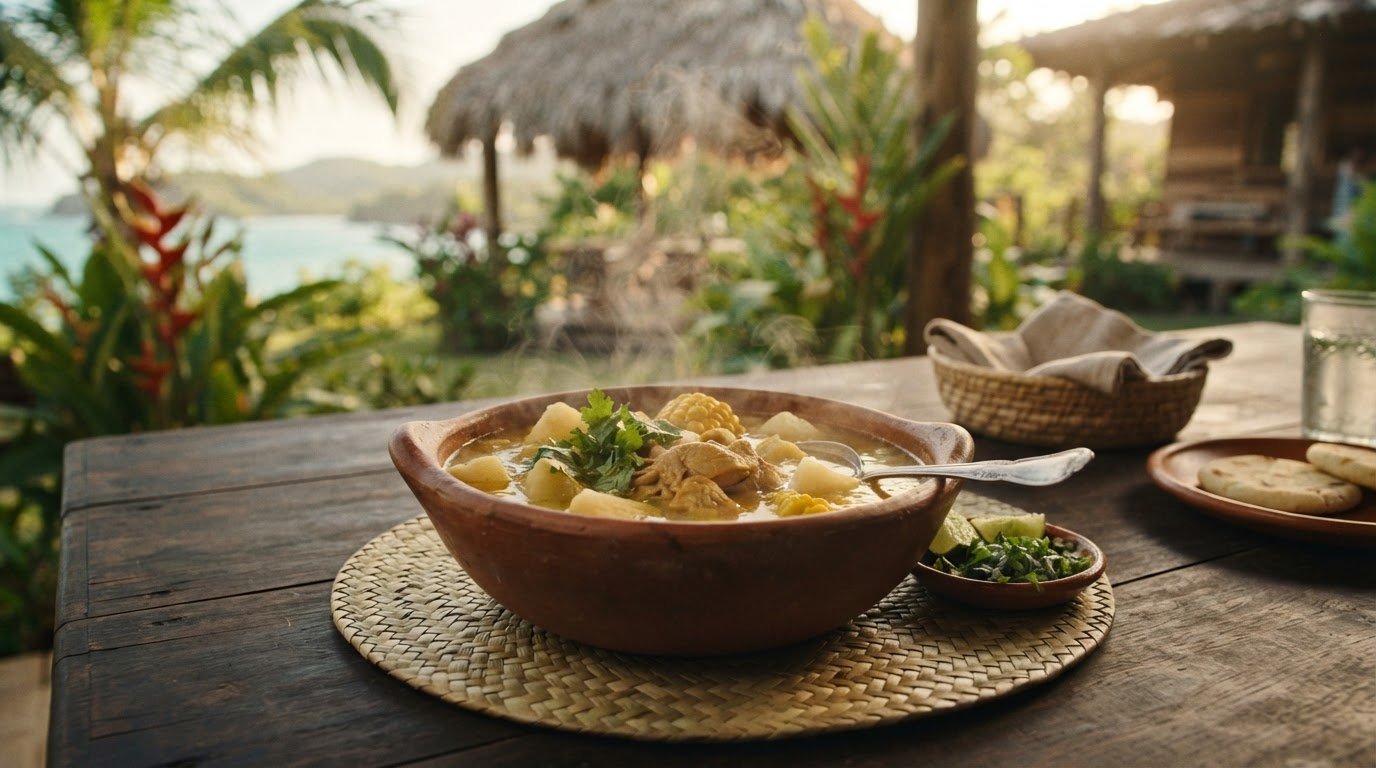
What if Panama’s widely recognised national dish isn’t the same as a restaurant’s signature dish? If you’ve found conflicting answers while searching “Panamanian national dish explained,” you’re not alone. Sancocho is widely considered Panama’s national dish, while Concolon is another beloved expression of Panamanian food, with a different form and place at the table.
It’s easy to mix up a cultural symbol with a restaurant specialty, especially when unfamiliar names make dishes hard to picture. Sancocho is a hearty chicken stew, commonly made with yuca and culantro, an aromatic herb that gives it a distinctive flavour. Its association with hospitality, family gatherings, and celebrations helps explain why its significance goes beyond the ingredients in the bowl.
Here, you’ll learn why sancocho is so closely associated with Panama, what commonly goes into the stew, and how it differs from Concolon. Concolon can refer to the crisp rice toasted at the bottom of a pot. At Concolon Panamanian Street Food Restaurant, it’s also the name of a signature dish made with rice, corn, beef or chicken, and savoury spices. They’re two distinctive dishes, each worth getting to know.
Key Takeaways
- This guide to Panamanian national dish explained clarifies why sancocho is widely recognised as a national symbol, without confusing cultural recognition with a formal government designation.
- Learn which ingredients are often found in Panamanian sancocho and why recipes can vary from cook to cook.
- Compare sancocho, arroz con pollo, and Concolon by dish type and cultural role, so each name has a clearer place in Panama’s food story.
- Use a few simple cues to understand a bowl of sancocho and appreciate how its ingredients come together.
- Discover how the restaurant’s signature Concolon offers a distinct Panamanian food experience of its own.
What Is Panama’s National Dish? Meet Sancocho
Sancocho is widely recognised as Panama’s national dish. It’s a comforting, savoury soup, most often described as chicken simmered with vegetables and herbs. Ingredients and proportions differ between cooks, so it’s best understood as a familiar dish with variations, not a single recipe everyone follows.
That distinction helps answer the question behind “Panamanian national dish explained.” A dish can represent a country through shared food culture and public recognition without having a legally defined recipe or formal government designation. In this case, sancocho’s national standing is best described as cultural recognition. For a broad overview of regional forms and Panamanian variation, see Sancocho Wikipedia.
What does sancocho mean in Panamanian food culture?
Sancocho is familiar, welcoming food, often associated with a family table or a gathering. Picture a savoury broth carrying the aroma of herbs, with tender chicken and softened vegetables making each spoonful hearty and comforting.
Its cultural importance doesn’t depend on every household cooking it the same way. Cooks may have their own preferred ingredients or methods, and that variety doesn’t make the dish less representative. Food traditions live through shared recognition, memories, and meals, not strict uniformity.
Is sancocho officially declared Panama’s national dish?
Common descriptions call sancocho Panama’s national dish, but that phrase alone doesn’t establish a formal legal or government designation. A claim of formal designation would need confirmation from an authoritative Panamanian government source. Without a verifiable official record establishing it, the careful wording is that sancocho is widely recognised as the national dish.
The distinction matters: “widely recognised” describes the dish’s place in food culture, while “officially declared” suggests a specific formal act. Keeping those meanings separate gives you a clear answer without overstating the claim. Sancocho’s place in Panama’s culinary identity remains meaningful either way, alongside the different recipes and interpretations found in individual kitchens.
What Goes Into Panamanian Sancocho, and What Makes It Distinctive?
Picture a bowl of savoury broth with tender chicken and vegetables softened by simmering. Panamanian sancocho is commonly described as containing chicken, yuca, corn, plantain, and herbs. Yuca, also called cassava, adds a substantial, starchy bite. Corn and plantain contribute their own textures and flavours, while herbs lend fragrance to the broth. This is a useful first picture, not a fixed recipe.
Britannica on Sancocho offers broader context on the dish and its ingredients. The core idea of the Panamanian version is a hearty soup in which meat, vegetables, and herbs come together in one pot. The broth carries the seasoning, while the solid ingredients make the meal filling. The balance can vary: one bowl may be more brothy, another more packed with vegetables.
Which ingredients are commonly associated with sancocho?
Think of each ingredient as having a role rather than treating the list as a strict checklist. Chicken provides a savoury base; yuca, corn, and plantain add substance and distinct textures; herbs bring an aromatic note. The broth ties it together. These ingredients are commonly associated with sancocho, but the exact mix can differ. A description should help you recognise the dish’s general character, not promise that every cook uses every item.
How can recipes vary while remaining recognisably sancocho?
Household recipes can differ in ingredients, proportions, and cooking methods. One cook may include more yuca, while another may prefer extra corn or herbs. Those differences are part of how a food tradition stays connected to individual kitchens and tastes. There’s no need to treat one ingredient list as the only authentic version. The broader identity comes from a hearty, savoury soup that brings meat, vegetables, and herbs together.
This flexibility is useful when you’re learning about Panamanian food. If a menu description leaves out one ingredient, that alone doesn’t mean the dish isn’t sancocho. Consider its overall form: a seasoned broth with substantial ingredients cooked together. Recipes can also describe their ingredients in different ways, so asking how a particular cook prepares the soup can clarify what to expect without assuming every bowl is identical.
In short, Panamanian sancocho is commonly pictured as chicken, yuca, corn, plantain, and herbs simmered in a savoury broth, though no single combination defines every recipe. That description captures the familiar ingredients while making room for variation. For another Panamanian food experience, the restaurant’s signature Concolon dish combines rice, corn, beef or chicken, and savoury spices. It’s a different dish, with its own character.
Sancocho, Arroz con Pollo, or Concolon: Which Dish Represents Panama?
Panama’s food story is bigger than one plate, but that doesn’t mean every beloved dish has the same symbolic role. Sancocho is widely recognised as the national dish. Arroz con pollo and Concolon are also ways to explore Panamanian food, each with a different form and role in this comparison. Keep those distinctions in view and the “Panamanian national dish explained” question is easier to answer.
| Dish | Broad dish type | Role in this comparison | How it is described |
|---|---|---|---|
| Sancocho | Hearty soup or stew | Widely recognised national dish | Chicken soup with vegetables and herbs |
| Arroz con pollo | Rice and chicken dish | Another popular, representative Panamanian dish | Often described with olives and capers |
| Concolon | Rice-based dish | The restaurant’s signature dish | Rice, corn, beef or chicken, and savoury spices |
This compares the dishes’ roles, not their taste or importance. A dish can be popular, personally cherished, or a restaurant signature without being the dish most widely recognised as the national one.
Why can more than one dish feel representative?
A national cuisine holds many dishes and memories. One person may name arroz con pollo as a favourite; another may feel a strong connection to Concolon. Those personal choices matter, but they don’t automatically change which dish is widely recognised as a national symbol. Questions about the “most typical” food can start a conversation, but they don’t establish that recognition is absent or shared equally among dishes.
How is Concolon different from sancocho?
Start with the form: sancocho is a broth-based soup, while the restaurant’s signature Concolon is made with rice, corn, beef or chicken, and savoury spices. They’re distinct dishes, not alternate names or versions of one another. Concolon has its own place in the restaurant’s expression of Panamanian street food, while sancocho has the wider national-dish recognition described here.
This distinction helps you read menus and food stories without treating “signature” and “national” as interchangeable labels. A signature dish identifies a restaurant specialty; national-dish recognition describes a broader cultural association. Neither label makes the other dish less worth discovering. For a closer look at Concolon and its place in Panamanian street food, explore the story of Concolon.

How to Understand and Enjoy Panama’s National Dish
A first bowl of sancocho is easier to appreciate when you take it one detail at a time. You don’t need to know a recipe by heart or expect every cook to serve the same version. Identify the dish, notice what’s in the bowl, then learn how that preparation brings the ingredients together. This simple approach makes Panama’s national dish easier to understand through its aroma, ingredients, and flavour.
What should a first-time diner notice in a bowl of sancocho?
Begin with the broth. Notice its savoury aroma and the fresh, fragrant note herbs can bring. Then look for familiar ingredients such as chicken, yuca, corn, or plantain. Yuca is a starchy root vegetable, also called cassava in English. Ingredients and textures vary, so let the bowl in front of you set expectations rather than assuming it will match a photograph or another cook’s recipe.
As you taste, notice how the broth, meat, and vegetables work together. The soup’s comforting character comes from that combination, not from one required spice level or serving style. If an ingredient is new to you, ask what it is and how it’s prepared. That can make the meal easier to understand and help you notice how its flavours come together.
- Identify the dish. Confirm that the name is sancocho, rather than assuming every soup or stew is the same.
- Notice the ingredients. Look at the broth and the vegetables or meat included in this version.
- Ask about the preparation. Find out what gives that particular bowl its flavour, especially if an ingredient is unfamiliar.
How does one dish fit into a wider food tradition?
Sancocho is one way into Panama’s varied food culture, not a complete picture of it. After noticing what makes the soup distinctive, explore other foods with different ingredients, textures, and roles. A guide to Panamanian street food can offer more context, while a broader guide to Panamanian food can take your curiosity beyond one dish.
Keep the experience open-ended. A bowl may introduce familiar ingredients in a new combination or prompt questions about flavours you haven’t tried before. That’s part of the pleasure: learning through a meal without expecting every kitchen or serving to be identical. To discover another distinct Panamanian food experience, explore the restaurant’s signature Concolon, made with rice, corn, beef or chicken, and savoury spices.
Discover Another Panamanian Favourite: Concolon
Understanding why sancocho is widely recognised as Panama’s national dish doesn’t mean it’s the only food worth discovering. Panamanian food has room for many favourites, each with its own character. Concolon is a separate dish and the signature dish at Concolon Panamanian Street Food Restaurant. It offers another way to enjoy Panamanian flavours, not a replacement for sancocho or a claim to the same national-dish recognition.
What makes Concolon a distinctive signature dish?
The restaurant’s Concolon brings together rice, corn, beef or chicken, and savoury spices. That combination distinguishes it from a broth-based soup like sancocho. Rice and corn provide the base alongside beef or chicken, with savoury spices bringing the flavours together. The restaurant’s dishes are prepared with fresh, locally sourced ingredients.
“Signature dish” has a specific meaning here: Concolon is the restaurant’s standout dish. It doesn’t mean every Panamanian cook prepares it the same way or that it carries the same cultural label as sancocho. Keeping those descriptions separate makes the answer to “Panamanian national dish explained” clearer: sancocho is widely recognised as the national symbol, while Concolon is a distinct restaurant signature and a Panamanian food experience in its own right.
Where can curiosity about Panamanian food lead next?
Try following one dish with another. Panamanian empanadas offer a different way to enjoy satisfying flavours; corn and meat tamales bring another traditional food form to the table. Patacones with shredded beef and tropical drinks round out the restaurant’s other choices. Each offers a different starting point for noticing how ingredients and textures vary across the menu, without expecting every dish to play the same role.
There’s no need to settle on one favourite before exploring. You might be drawn to the comfort associated with sancocho, curious about the restaurant’s rice-and-corn Concolon, or ready for an empanada or a tropical drink. Let your appetite lead and enjoy each dish for what it is. That’s a welcoming way to keep learning about Panamanian food, one distinct flavour at a time.
For a taste of the restaurant’s signature dish and other choices, explore our Panamanian street-food dishes. Come with curiosity, bring your appetite, and discover another expression of Panama’s food culture.
Keep Exploring Panama One Dish at a Time
Let curiosity guide your next meal. A dish can introduce you to a country’s food culture without telling the whole story. Now that you have the Panamanian national dish explained, keep exploring with an open mind and notice how different foods offer their own flavours and experiences.
At Concolon Panamanian Street Food Restaurant, Concolon is the signature dish, distinct from sancocho. It brings together rice, corn, beef or chicken, and savoury spices, and the restaurant’s dishes are prepared with fresh, locally sourced ingredients. It’s another way to enjoy Panamanian food, whether you’re already familiar with the cuisine or just beginning to discover it.
Explore Concolon’s Panamanian street-food dishes and choose what catches your appetite. Discover another expression of Panama’s food culture, one plate at a time.
Frequently Asked Questions
Does Panama have an officially declared national dish?
Sancocho is widely recognised as Panama’s national dish, but that cultural description doesn’t by itself establish a formal government declaration. Without a verified official source confirming such a designation, it’s more accurate to say “widely recognised” than “officially declared.” When you see both phrasings, check whether the source distinguishes cultural recognition from a law or formal government act.
Is Panamanian sancocho spicy?
Panamanian sancocho isn’t necessarily hot or chili-heavy. Its flavour is often described as savoury and herb-led, but recipes and individual servings can differ. If you’re sensitive to heat, ask whether a particular preparation includes chili or spicy condiments before ordering. That’s more reliable than assuming every bowl has the same heat level based on the dish’s name.
Can Panamanian sancocho be made without chicken?
Versions made with meat other than chicken are possible, though chicken is the best-known base for Panamanian sancocho. Ingredients can vary by cook, so don’t assume a meat-free version either. If you avoid chicken or another ingredient, ask what’s in the specific preparation before eating. That helps you understand what you’ll be served rather than relying on a general recipe description.
What is culantro, and is it the same as cilantro?
Culantro and cilantro are different herbs, despite their similar names. Culantro has long, serrated leaves and a strong, distinctive aroma; cilantro has softer, rounded leaves and a different, often brighter flavour. They aren’t exact substitutes, since their strength and character differ. If you’re unfamiliar with culantro, asking about it can help you recognise the herb’s contribution to the soup.
Is arroz con pollo also considered a Panamanian national dish?
Arroz con pollo is a popular and representative Panamanian dish, but it isn’t the answer most commonly given for Panama’s national dish. Sancocho holds that wider recognition. A favourite meal and a national food symbol aren’t necessarily the same thing, so you can enjoy arroz con pollo as part of Panama’s food culture without treating it as an equal official designation.
What is the difference between sancocho and a regular chicken soup?
Sancocho is a named dish with a strong association with Panamanian food culture, while “chicken soup” is a broad category that can describe many different recipes. The name alone doesn’t tell you exactly which ingredients or preparation a cook uses. To understand a particular bowl, look beyond the generic label and ask what makes that version recognisably sancocho to the person who prepared it.
Can visitors explore Panamanian food beyond sancocho?
Absolutely. Sancocho is a starting point, not the whole range of food Panama offers. Try an empanada as a snack, sample a corn and meat tamale, or choose patacones with shredded beef for something different. Tropical drinks offer another way to explore. At Concolon Panamanian Street Food Restaurant, these dishes give visitors and locals more flavours to discover beyond the soup.
Leave a Reply