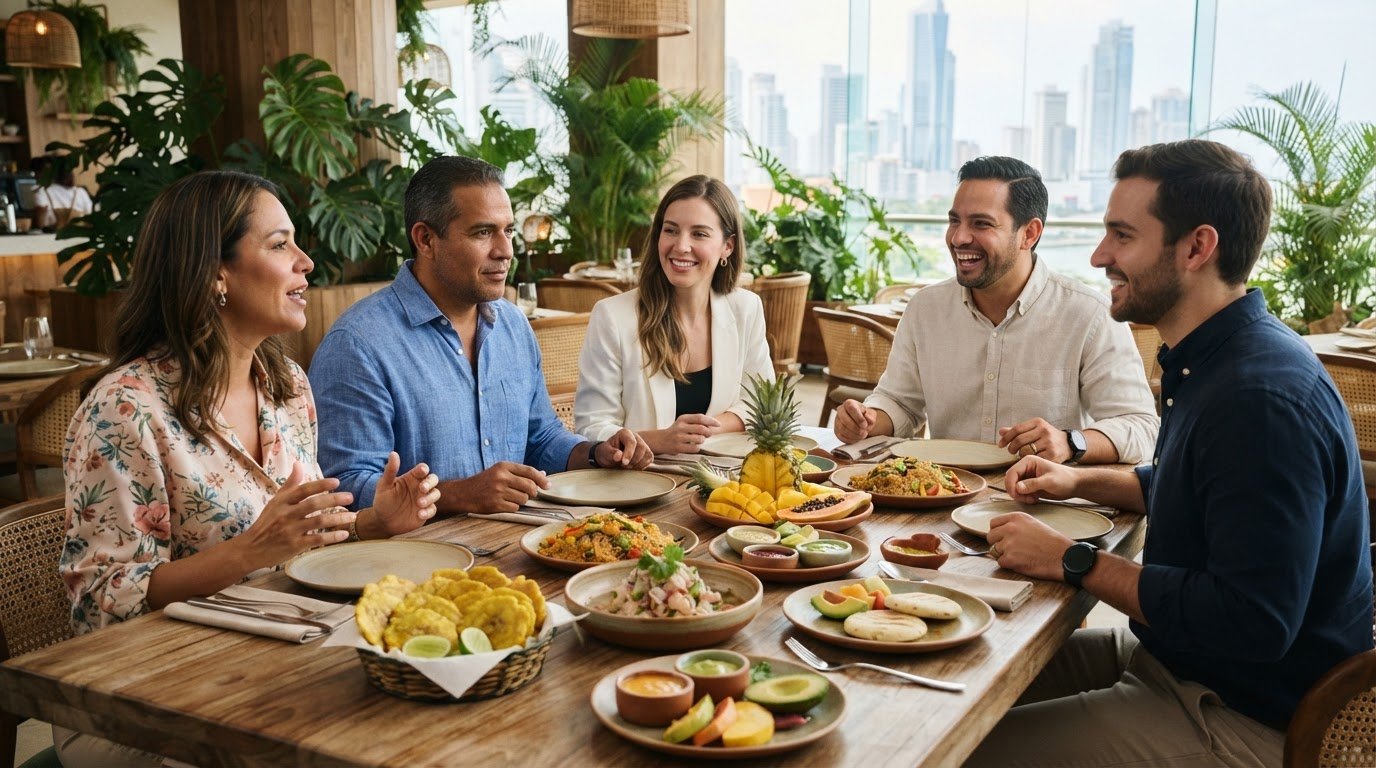
A client meal can build trust without feeling like a pitch. To impress clients with authentic local food, choose dishes that invite sharing, tailor the menu to your guests, and leave room for easy conversation. Thoughtful hosting matters as much as what’s on the table.
Make guests feel welcome, not put on the spot. A shared meal gives everyone a natural way to connect, while warm hospitality and distinctive Panamanian flavors can make the gathering feel personal and memorable.
Discover how to plan a comfortable business lunch, tailor the menu to your group, and present local food with care. You’ll also find practical ways to keep the conversation flowing and create a warm, genuine experience suited to the occasion.
Key Takeaways
- Use a shared meal to make conversation feel natural, and give your client room to speak and connect.
- Ask about guests’ food preferences and allergies before settling on a menu for the group.
- Bring local dishes to the table with variety and thoughtful combinations that make their flavors easy to enjoy.
- Explore Panama’s food culture by seeking local recommendations and choosing dishes that reflect the place.
1. Building client trust through shared dining experiences
A shared meal can help you impress clients with authentic local food when it feels welcoming, not staged. In Panama, local dishes can make a business lunch feel rooted in place. The connection comes from thoughtful hosting, not an elaborate pitch or crowded table.
Begin by deciding the meal’s purpose: perhaps you’re welcoming a new partner or discussing a project. Choose a setting and menu that leave space for conversation—whether that involves an intimate neighborhood wine bar such as viatrenta.com for a meeting in New York or a regional eatery when traveling. Ask open questions about the client’s work or impressions of Panama, then listen closely. If a guest describes a business challenge, ask a relevant follow-up rather than turning the discussion back to yourself. Keep the conversation professional and avoid overly personal questions. That balance shows interest without making lunch feel like an interview.
Plan the menu before the meeting, so guests aren’t choosing under pressure. A simple sequence helps: decide what will be served, confirm the timing, and arrange payment before your client arrives. Settling the bill in advance prevents an awkward pause at the end. If you’re arranging food for a group, check the caterer’s reviews and coordinate when the dishes should be ready. Food that arrives at the planned moment supports the conversation; delays can pull attention away from it.
Your own attention matters, too. Silence or put away your phone, so notifications don’t interrupt a client’s point. Avoid alcohol during a business lunch and keep the focus on the discussion. For example, if a guest shares a concern about a project, let them finish before responding. Ask a clear question, reflect the main point, and explain the next step you’ll take. These small choices make a shared meal feel respectful and purposeful. In Panama, pairing local hospitality with attentive listening gives clients a genuine welcome, while leaving room for business to unfold naturally.
Keep the exchange balanced by giving the client room to shape it. A thoughtful prompt invites them to share what matters, while a relevant follow-up shows you’re paying attention. Let their answer guide your next question rather than rushing to fill every pause. Stay focused on the client’s work and avoid personal topics that may feel intrusive.
2. Personalising menus and guest experiences
Start personalising the meal after sending the invitation. Ask each guest about food allergies and preferences before choosing dishes. A simple message can ask what they enjoy and whether they avoid particular ingredients. This gives guests a comfortable way to share useful details before they sit down. It also helps you plan one menu for the group, rather than building the meal around your own tastes.
Use the replies to identify shared preferences. If several guests enjoy familiar, mild flavors, make them central to the menu. If the group is keen to try new dishes, include local options alongside recognizable choices. Don’t let one person’s favorite dish shape every decision. A host who loves spicy food can still offer a balanced selection for guests with different preferences. Thoughtful variety helps everyone feel considered without making the meal complicated.
Give dessert the same consideration as the main meal. Before ordering, ask guests about lactose intolerance and diabetes, since these may affect what they’re comfortable eating. Keep the question discreet and matter-of-fact: “Are there any dietary needs we should consider, including when choosing dessert?” Use the answers to select a suitable option or offer a choice. Don’t guess from someone’s appearance or make a guest explain personal details at the table.
Personal touches can extend beyond the plate. Note how guests prefer to be addressed, share a short explanation of an unfamiliar dish, and make serving choices easy to understand. If a client is new to Panamanian food, describe ingredients plainly instead of assuming they know local names. For a group with varied tastes, present a few different flavors and let people choose what interests them. These details make the meal feel designed for its guests, not simply arranged around a meeting. For more ideas to shape a locally rooted menu, explore Panamanian menu inspiration.

3. What are the best ways to present local food at a client event?
At a client event in Panama, present local food as a taste of place, not a decorative theme. Choose dishes with regional ingredients, then describe their origin in one plain sentence. A small menu card can name a key ingredient and explain its flavor. Guests get an easy opening to ask questions, without turning the meal into a formal presentation.
Build variety through contrast. Pair familiar flavors with a dish that introduces something new, or offer different textures across the menu. The Food and Agriculture Organization of the United Nations notes that local food can be presented with greater variety, better preparation, and new combinations. For example, a menu might balance crisp, soft, savory, and bright elements. Each choice gives guests another way to experience the food.
Preparation shapes the experience as much as the ingredients. Choose serving formats that let guests taste dishes comfortably while talking, such as manageable portions rather than awkwardly large servings. Keep descriptions accurate and direct. If a dish has a distinctive spice or texture, mention it before guests take a bite. That detail helps visitors decide what to try and invites conversation about Panamanian food traditions.
For a client event, catering can make local dishes part of a coherent gathering rather than an afterthought. Match the presentation to the occasion: a relaxed meeting may suit shared platters—a format commonly seen with corporate providers like Casa Catering Sydney—while a formal reception may call for portions guests can enjoy standing. Use clear labels, keep serving utensils with each dish, and arrange the food so guests can see their choices. Introduce a dish and share why it belongs on the menu, then let guests explore at their own pace. The result feels generous, distinctly local, and easy to enjoy.
Give guests a low-pressure way to discover unfamiliar dishes. If travelers find a menu difficult to read, they can look at what other diners are eating and ask about the same dish. Hosts can make discovery easier by identifying dishes and keeping descriptions easy to find.
Travelers can observe what people do before choosing where to eat, or plan trips around food events and festivals. A thoughtfully presented local menu can offer clients a glimpse of the curiosity about food that draws people to explore Panamanian traditions.
4. Like local
To impress clients with authentic local food, start with local voices, not assumptions. Ask a Panamanian resident where they would take visiting friends for a good local meal. Notice how enthusiastically they describe the place and which dishes they recommend. A confident suggestion can give you a useful lead, and a specific dish can be a starting point for your own exploration.
Build on that recommendation by exploring local specialties before arrival or once you’re in Panama. Look for dishes and restaurants to try, then compare suggestions with what you see locally. A menu written in the local language may point toward a restaurant serving its community, rather than focusing mainly on visitors. Learning a few food-related words also helps you ask about ingredients and show genuine interest.
At a restaurant, take a moment to observe before choosing. Notice what diners order, how dishes are served, and which tables are sharing food. If a menu feels unfamiliar, ask about a dish you see nearby or request the same choice. You can also ask locals for recommendations. Their enthusiasm for a particular spot can help you decide which suggestion to explore.
Markets offer another way to discover what people eat. Browse produce stalls, notice ingredients that appear repeatedly, and use those observations to guide your meal choices. Restaurants focused on a few specialties can also make it easier to understand what they do best. A lively dining room may offer another clue, but your client’s comfort and the occasion should guide the final choice.
Turn these discoveries into a thoughtful client outing. Choose a place with a dish you can introduce in a few clear words, then let the food prompt conversation. Explain how you found the recommendation or what made a local specialty stand out. That small story shows curiosity about Panama and invites your guest to share their own impressions and preferences.
Concolon Panamanian Street Food Restaurant: Concolon
Concolon Panamanian Street Food Restaurant brings authentic Panamanian street-food flavors to a client meal or event. Choose the signature Concolon, Panamanian Empanadas, Corn and Meat Tamales, or Patacones with Shredded Beef to introduce guests to distinctive local dishes. Their varied textures and savory flavors can provide an easy conversation starter.
For a shared gathering, choose dishes suited to the occasion and give guests a chance to explore familiar and new tastes. Concolon, made with rice, corn, beef or pork, and savory spices, can anchor the meal, while empanadas or tamales add more options to share. It’s a natural way to make local food part of welcoming clients.
Contact Concolon Panamanian Street Food Restaurant or visit concolon-restaurant.com to explore the menu.
Make the Next Client Meal Meaningful
A client meal can be more than a pleasant break in the workday. It offers a relaxed setting to discover shared interests, learn about Panama through its food, and continue the conversation beyond the meeting agenda. Choose a gathering that feels genuine to you and comfortable for your guest.
As you plan your next invitation, consider the experience you want your client to remember. A warm welcome and a thoughtful local meal can help you impress clients with authentic local food while making space for a real connection. Keep the focus on your guest and let the food add character to the occasion.
For a taste of Panamanian street food at your next gathering, contact Concolon Panamanian Street Food Restaurant. Bring your hospitality to the table, and let a good conversation begin.
Leave a Reply