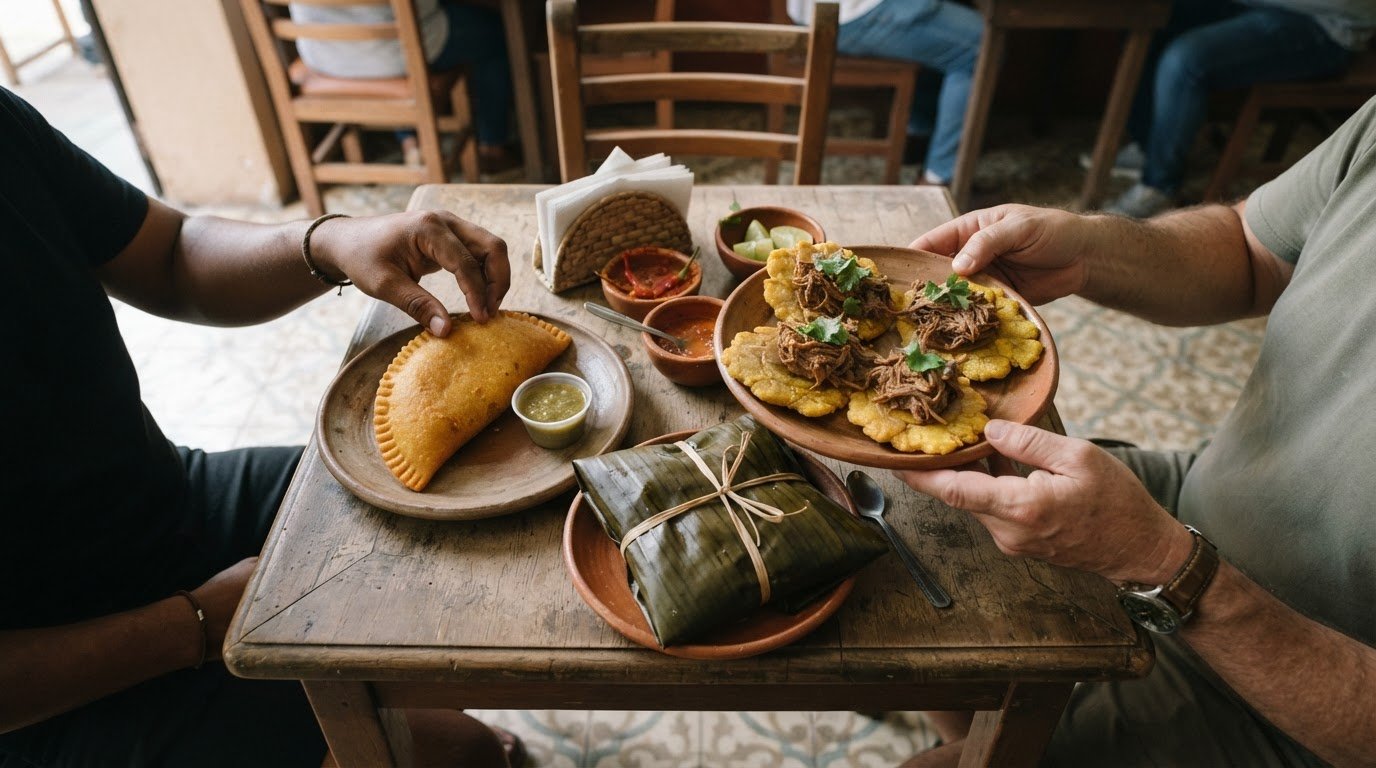
Panamanian home cooking isn’t defined by one dish; it’s the comforting mix of rice, beans, plantains, seasoned meats, and snacks made for sharing. For food that tastes like Panamanian home cooking, look for familiar ingredients with layers of Spanish, North American, Chinese, and African influence, often full of savory flavor rather than intense heat.
That mix makes Panamanian cuisine distinctive and welcoming. Carimañolas pair crisp yucca with a savory filling, coconut rice brings mellow richness to the table, and empanadas, tamales, patacones, and hojaldres turn familiar ingredients into satisfying bites. These dishes offer a taste of the flavors and textures behind food that tastes like Panamanian home cooking.
Key Takeaways
- Learn what makes carimañolas distinctive and how their savory fillings bring comfort-food flavor to a crisp yucca snack.
- Discover how fondas serve everyday home-style meals and what to look for in a traditional Panamanian plate.
- Explore how rice with pigeon peas and coconut fits into Panama’s table and complements familiar meal flavors.
- Get to know the street snacks that make Panamanian food easy to enjoy, from empanadas and tamales to patacones.
1. Carimañolas filled with beef, chicken, or cheese
Carimañolas are a classic Panamanian bite: crisp yucca fritters with a savory center. Seasoned ground beef is a common filling, though chicken or cheese are other comforting options. Their appeal is in the contrast: a golden exterior gives way to tender yucca and a warm, flavorful middle. Familiar ingredients and careful preparation connect these handheld fritters with Panama’s home-cooking traditions.
For a traditional beef version, boil chopped yucca from four whole roots in four quarts of water until tender. Prepare a filling with two pounds of ground beef, cooking the mixture for 10 to 15 minutes so the flavors come together. Shape the yucca around one tablespoon of filling per ball, then leave the formed carimañolas to cool at room temperature for 15 minutes. Fry them in three cups of oil until golden. For chicken or cheese fillings, keep the same yucca shell and place the chosen filling in the center before sealing.
Another home-style favorite is sancocho, a hearty chicken soup that brings vegetables and herbs into one warming pot. A Panamanian recipe can include one pound of yucca, three plantains, and one and a half pounds of pumpkin alongside chicken. Corn and fresh herbs contribute familiar flavors, while the yucca and plantains make each bowl substantial. Sancocho is identified as Panama’s national dish and remains a staple in households.
Chicken and rice bring comfort in a different form. Arroz con pollo combines chicken and rice with spices and vegetables in one pot; some versions include olives or raisins. As it cooks, the rice absorbs the seasoning, making each serving savory and fragrant. Together, carimañolas, sancocho, and arroz con pollo show the range behind food that tastes like Panamanian home cooking: crisp yucca, gently simmered chicken soup, and a pot of seasoned rice to share.
2. What makes Panamanian food unique?
Panamanian cuisine brings together Spanish, North American, Chinese, and African cooking influences. Dishes can be deeply seasoned without being very spicy, though some use mild-to-medium-heat peppers. If you have dietary restrictions, focus on the ingredients rather than the dish name: rice, beans, meat, and vegetables vary by preparation, so choose what suits your needs. Ceviche, for example, features raw fish or shrimp marinated with lime juice, onions, and cilantro.
Fondas are everyday places to find cooked, home-style meals. A typical plate may include white rice, red beans or lentils, maduros, and stewed chicken, stewed beef, or meatballs. Meals often pair protein with rice and beans, with sides such as plantains. What’s served varies, but the familiar combination makes these meals a popular choice for a filling lunch or dinner.
Common ingredients include rice, beans, chicken, beef, fish, yucca, corn, plantains, and vegetables. Cooks build flavor with herbs and spices, while peppers may add gentle heat; sancocho may also include potato. Food traditions vary across Panama. La Chorrera is known as the place where chicheme originated, a traditional drink made with corn, milk, and spices.
To make a Panamanian meal at home, start with a familiar pairing: cook rice and beans, add a protein such as stewed chicken, then serve with salad or fried plantains. For sancocho, simmer chicken with yucca, corn, plantains, and fresh herbs until the ingredients are tender. For ceviche, marinate fish or shrimp with lime, onion, and cilantro. If you’d rather enjoy a prepared snack, try Panamanian empanadas, filled with savory flavor.
3. Rice with pigeon peas and coconut
Rice with pigeon peas and coconut combines tender grains, hearty legumes, and mellow coconut flavor. Pigeon peas add a soft, earthy bite, while coconut gives the rice fragrant richness. For a home-style version, cook the peas until tender, then combine them with rice and coconut milk. Let the grains absorb the liquid, stirring gently to keep the peas whole. The result is a satisfying dish that can anchor a meal or accompany a savory main.
Build the plate around contrast. Serve coconut rice with protein and vegetables, or pair it with a bright salad to balance its creamy, savory notes. Ropa vieja makes a hearty partner: shredded beef simmers in a tomato-based sauce with onions, peppers, and spices, then is served with rice. Tomato adds tang, while the peppers and onions soften into the beef. Spoon some sauce over the rice to bring the textures together.
To make ropa vieja, cook the beef until it pulls apart easily, shred it, then return it to the pan. Stir in tomato, onions, peppers, and spices, and simmer until the sauce coats the meat. Keep the seasoning balanced so it complements rather than overpowers coconut rice. Across Panama and the Americas, rice-based meals show how familiar staples take on different character through ingredients and preparation.
These dishes also make a flexible meal for sharing. Put coconut rice in the center and serve ropa vieja and vegetables alongside it, so everyone can add as much sauce as they like. For a wider spread, Panamanian empanadas bring a crisp, savory bite without competing with the rice’s gentle coconut aroma. Beef, pigeon peas, and coconut bring distinct flavors together in a comforting meal.

4. Panamanian street food and snacks
Panamanian street food brings crisp, soft, sweet, and savory flavors into easy-to-enjoy bites. Empanadas, filled with beef, chicken, cheese, or vegetables, are a popular savory snack across the country. The filling gives each one its character, while the outer layer makes it easy to eat on the go. For a first taste of Panamanian cuisine, notice how familiar ingredients become distinctive through their fillings and preparation.
Patacones offer a different kind of crunch. Green plantains are fried, smashed, then fried again for a crisp exterior and tender center. They’re served as a snack or side, often alongside a main course. Tamales bring another texture: seasoned meat, vegetables, and cornmeal are wrapped in banana leaves and steamed. The leaf lends fragrance as the filling cooks, making each tamale a compact, satisfying package.
Breakfast has its own street-food favorites. Hojaldres are light, fluffy fried dough with a slight sweetness, often served with cheese, meat, or honey. Their gentle sweetness contrasts with savory fillings, making them a quick morning bite or a snack to share. For a heartier option, yucca fritters combine grated yucca and spices, fried until golden. Maduros, made from overripe plantains fried until caramelized, add a sweet finish to the plate.
Try a mix to experience how these snacks complement one another: pair a savory empanada with a patacón, then add a hojaldre for a softer, slightly sweet bite. Coconut-rich rice dishes offer a fuller meal contrast, while street snacks are easy to share between meals. For a taste of these familiar flavors, try Panamanian empanadas and enjoy a delicious bite rooted in everyday food culture.
Concolon Panamanian Street Food Restaurant
Concolon Panamanian Street Food Restaurant offers a welcoming way to enjoy the familiar flavors of Panamanian home cooking without preparing them yourself. Its menu brings together street-food favorites and comforting dishes, giving you a chance to explore different textures and savory flavors over a meal.
Try Concolon, made with rice, corn, beef or chicken, and savory spices. Panamanian Empanadas offer a handheld savory bite, while Corn and Meat Tamales bring seasoned fillings wrapped in cornmeal. For something crisp and hearty, Patacones with Shredded Beef pair fried plantains with tender meat. These choices make it easy to share a taste of Panama’s food culture with friends or family.
Ready to enjoy these home-style flavors? Visit Concolon Panamanian Street Food Restaurant.
Make Your Next Meal a Taste of Panama
Let curiosity guide your next meal. Notice the flavors and textures you enjoy, then explore more of Panama’s food culture, whether you’re sharing a snack or sitting down to a comforting meal. Finding food that tastes like Panamanian home cooking is a delicious way to connect with the country’s traditions, one bite at a time.
For a prepared taste of that spirit, Concolon Panamanian Street Food Restaurant serves Concolon, Panamanian Empanadas, and Corn and Meat Tamales. Each offers a different way to enjoy familiar ingredients and savory flavors. Choose what appeals to you, bring someone along, and make your next meal an invitation to discover something new.
Contact Concolon Panamanian Street Food Restaurant and take the next step toward enjoying Panamanian food. ¡Enjoy every bite!
Frequently Asked Questions
What makes Panamanian food unique?
Panamanian food reflects several culinary traditions while staying closely connected to familiar local ingredients. That blend appears in everyday plates and festive specialties, with seasonings and sides varying to suit the dish. You might find seafood alongside rice-based meals, or corn in drinks and snacks. The variety makes Panama’s cuisine more than a single signature recipe: it’s a lively mix of tastes and traditions.
A to Z of Panama Cuisine: What to Eat in Panama?
Start with a few different styles instead of trying to sample everything at once. Choose a savory main such as Bistec Picado, add a corn-based side like bollo, and try a traditional drink such as chicheme. For a lighter option, Panamanian ceviche offers bright citrus flavors. This small tasting gives you a sense of the country’s range, from hearty cooked dishes to refreshing seafood and corn drinks.
Where can I find Panamanian home cooking near me?
Concolon Panamanian Street Food Restaurant is an in-person option for enjoying Panamanian street-food dishes. Its menu includes Concolon, Panamanian Empanadas, Corn and Meat Tamales, and Patacones with Shredded Beef. Whether it’s near you depends on your location, so consider your starting point when deciding where to dine. The restaurant also provides catering for events, bringing its Panamanian food offerings to gatherings.
Which Panamanian restaurants serve traditional or home-style food?
Concolon Panamanian Street Food Restaurant serves traditional Panamanian street-food dishes, including its signature Concolon. The dish is presented as a savory Panamanian street-food option. Panamanian Empanadas and Corn and Meat Tamales offer other ways to explore familiar flavors. If you’re looking for a home-style feel, these dishes provide a starting point for discovering the ingredients and hearty combinations found in Panamanian food culture.
What Panamanian dishes taste most like everyday home cooking?
Sancocho, arroz con pollo, and plates of rice, beans, protein, and sides are satisfying examples of everyday comfort food. Their appeal comes from filling ingredients and familiar seasoning, not elaborate presentation. For food that tastes like Panamanian home cooking, notice how savory mains pair with rice, vegetables, or plantains. Sharing a meal with a mix of these flavors can make the experience especially welcoming.
What regions of Panama are known for distinctive home-cooking dishes?
La Chorrera is known as the place where chicheme, a traditional drink made with corn, milk, and spices, originated.
Leave a Reply