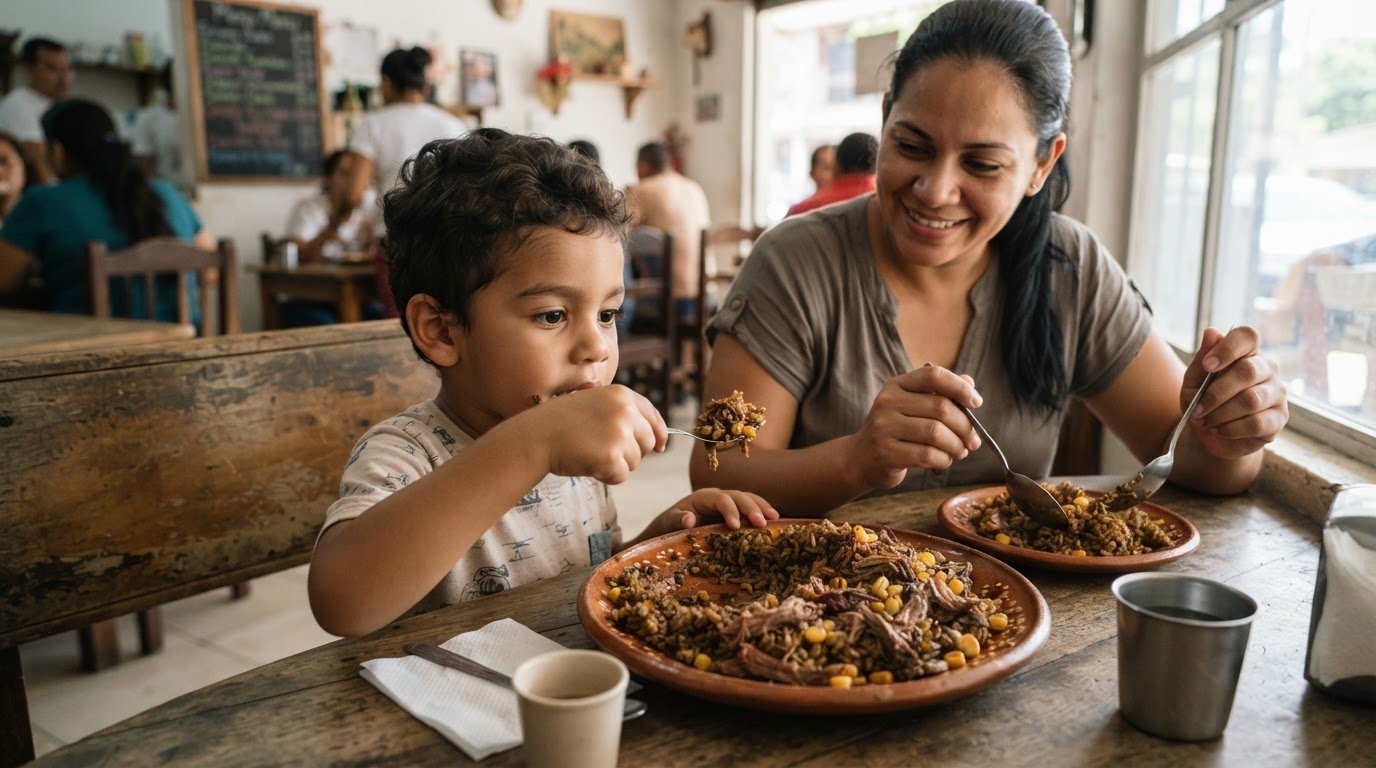
Corn is one of the easiest ways to begin introducing kids to Panamanian cuisine. Start with familiar, comforting flavors, then explore dishes that bring in new textures, spices, and stories from across Panama.
It’s natural to wonder which foods might appeal to young eaters. Offer a little at a time: warm sancocho, crisp hojaldres, or carimañolas with soft yuca dough and savory filling. Keep spicy sauces on the side, and let kids decide what they want to taste.
This guide explores traditional favorites, Afro-Panamanian cooking with coconut-rich flavors, lively street snacks, and corn-based foods such as bollos, tortillas, and fritters. Make each taste a shared discovery: notice how plantain can be sweet or savory, or talk about the ingredients wrapped in a tamale. There’s no need to turn a meal into a lesson. Follow their curiosity, share stories about the food, and let Panama’s colors, aromas, and flavors invite them in.
Key Takeaways
- Begin with familiar flavors and let children explore new textures at their own pace.
- Discover how coconut, seafood, and regional spices bring Afro-Panamanian cooking to the table.
- Turn street snacks into an easy way to explore Panama’s mix of sweet and savory tastes.
- Look beyond corn on the cob to find hearty traditional foods made with corn dough.
1. Traditional dishes including hojaldres, carimañolas, and sancocho
Begin with familiar shapes and flavors. Panamanian hojaldres are fried breads, often eaten for breakfast with cheese, salsa criolla, or sugar. Offer a small piece plain, then let children choose a topping. Carimañolas have a different texture: yuca dough surrounds a savory meat filling before the pastry is deep-fried. Cut one open and let the warm center cool before tasting.
Sancocho can be a gentle introduction to traditional soup. In Panama, it’s made with chicken, ñame, culantro, and clear broth, and families may serve it with rice. Point out the chicken and vegetables before eating, and offer the broth separately from the solid ingredients. This gives children a chance to explore the aroma and texture without trying everything at once.
Indigenous food traditions offer another way to talk about local ingredients. Guna, Emberá, and Ngäbe communities used corn, root vegetables, and fish before European contact. Indigenous regions continue to preserve traditional ingredients and cooking techniques. When tasting artisanal cacao, invite children to notice its flavor alongside familiar foods, without expecting every child to enjoy its bitterness.
Panama’s African and Afro-Caribbean heritage also shapes its food. The country has two Afro cultures, the Congos and the Afro-Antillean community. Coconut rice and beans can be a mild starting point, while Caribbean-region dishes may be hotter. Keep spicy sauces separate so children can sample the main flavors first.
Finish with a small taste of chicheme, a cold, sweet drink made with corn, milk, and cinnamon, or a bite of mamallena, flan, or cocada. For allergy and safety concerns, check for wheat in fried bread, dairy in cheese or chicheme, and seafood in dishes that contain it. Let hot soup cool, and check each bite for bones or firm pieces.
2. Afro-Panamanian spices, coconut flavors, and seafood
Afro-Panamanian cooking brings together seafood, coconut milk, spices, and African influences. Let children notice how coconut changes the aroma and taste of rice. Ají chombo, a locally grown hot pepper, adds heat, so serve spicy sauce separately and start with the milder parts of the meal.
Ceviche offers a bright, cool contrast to warm dishes. Panamanian ceviche commonly combines fish or shrimp with lime juice, onions, cilantro, and peppers. Corvina is a popular choice, while tilapia and octopus also appear. Before offering a small portion, describe the sharp lime and crunchy onion. The Spanish name “ceviche” is easy to recognize on menus.
Seafood can be fried, grilled, sautéed, or dressed with spicy garlic sauce. Red snapper is often served whole and deep-fried with patacones, while shrimp appears in ceviche and rice dishes. Each preparation offers a different texture to explore: crisp fish, tender shrimp, or ceviche’s fresh, citrusy bite.
For a hearty dish, arroz con camarones y coco pairs shrimp with rice cooked in coconut milk. One pot brings together rice, pigtails, beans, shrimp, coconut, curry, saltfish, and spices. That mix can spark a conversation about layered Afro-Caribbean flavors. Corn-based tamales, wrapped in banana leaves and steamed, offer a savory alternative for children who prefer familiar fillings to seafood.
Keep the tasting relaxed: place a little rice beside a small seafood sample, then let children choose what to try. For another savory Panamanian bite alongside these flavors, explore Panamanian Empanadas.

3. Street food and snacks
Panamanian street food gives children a hands-on way to explore new flavors. Patacones are made from unripe green plantains, toasted twice, and served crisp. Compare one with plátano en tentación, where ripe plantain cooks in sweet syrup. Ask which seems crunchier, softer, sweeter, or more savory. This simple tasting game shows how familiar fruit can have very different textures.
Panamanian snacks share ingredients such as corn and plantains with foods from other Latin American countries, but have their own combinations. African influences and Caribbean flavors are part of Panama’s food story. Make tasting approachable with a small bite, then notice whether sweetness, salt, or spice comes through first. Children can describe the flavor without finishing the snack.
For a snack outing in Panama, look for chicheme at local markets or from street vendors. This cold drink combines corn, milk, and cinnamon in an unexpected form. Plan around your family’s appetite, and choose a snack that suits the moment rather than expecting every food stall to offer the same dishes.
For a sweet stop, try cocadas, coconut candy made with condensed milk. Bolitas de tamarindo are sugar-coated balls with a tart fruit flavor, while huevitos de leche are small milk candies. These sweets make it easy to compare coconut, tamarind, and creamy milk flavors. Chicheme can also feel like dessert in a cup, with corn and cinnamon in every sip.
Use each snack to talk about how cooking changes an ingredient. Green plantains become crisp after toasting, while ripe plantains soften in syrup. At a market or street vendor, chicheme offers a sip-sized way to try corn in a drink instead of a meal. Let children choose between a familiar texture and a new one, then describe the difference together.
4. Corn-based dishes and fritters
Corn is more than a side dish in Panama. It features in breakfasts, snacks, and family meals. Compare different forms with children: soft boiled dough, a thick fresh-corn tortilla, or a crisp fritter. This tasting approach makes corn’s changing texture part of the country’s food culture, not just another ingredient.
Panamanian bollos come in two main varieties, made with fresh or dry corn. Cooks wrap the corn dough in nahuala palm leaves, corn husks, or plantain leaves, then boil it. Unwrap a bollo together and notice how the wrapper holds its shape. Some dry-corn versions include butter, corn, or beef. The beef-filled kind is called bollo preñado.
For a hands-on comparison, try tortilla changa, a thick tortilla made from fresh corn. Almojábanos offer a different bite: these S-shaped corn fritters are crisp outside and tender inside. Panama also has fried corn-batter tortillas topped with fried eggs and cheese for breakfast. These examples show how the same grain can become soft, chewy, or crunchy depending on how it’s cooked.
Panamanian empanadas can be made with corn or flour dough, with fillings such as meat, vegetables, cheese, or sweet ingredients. Let children guess the filling before tasting, then compare the corn casing with a familiar wheat-based food. Corn also features in tamales, where dough surrounds meat and cooks wrapped in leaves. These dishes introduce cooking traditions found across Panama, including in its interior provinces.
Explore these traditions one texture at a time: start with a plain corn dough, then try a filling or topping. Seafood is another part of Panamanian cooking, while corn fritters and bollos keep the focus on the grain itself. For a next taste of local street-food flavors, explore Panamanian flavors.
Concolon Panamanian Street Food Restaurant
Concolon Panamanian Street Food Restaurant gives families a delicious way to bring the flavors discussed here to the table. If you’re ready to move from reading about Panamanian food to tasting it together, choose dishes that make the country’s ingredients and traditions part of an easy shared meal.
Explore Concolon, Panamanian Empanadas, Corn and Meat Tamales, and Patacones with Shredded Beef. Their corn, savory fillings, and plantains offer curious young eaters a range of textures and flavors. Talk about what everyone notices, from a crisp bite to soft corn dough, without turning the meal into a lesson.
For a relaxed next step in introducing children to Panamanian cuisine, contact Concolon Panamanian Street Food Restaurant.
Make the next meal a shared discovery
A gentle approach to introducing kids to Panamanian cuisine is to make curiosity the goal, not an empty plate. Let your child choose what to notice first: a new aroma, a different texture, or a familiar ingredient prepared in an unexpected way. Share your own impressions, too. Your enthusiasm can turn a first taste into a warm family memory.
Keep the conversation open after the meal. Ask which flavor they’d like to try again, and let the answer shape your next food adventure. Each shared meal can build familiarity and strengthen your connection to Panama’s food culture.
Ready to make Panamanian flavors part of your family’s next meal? Contact Concolon Panamanian Street Food Restaurant and take that next step together. Bring your curiosity, follow your child’s lead, and enjoy discovering something delicious as a family.
Frequently Asked Questions
What are popular Panamanian dishes that are kid-friendly?
Rice-based dishes, empanadas, and plantain sides can be approachable choices for young eaters. Serve a small portion of a familiar item alongside a new dish, rather than making the whole meal unfamiliar. A child who likes savory fillings might enjoy an empanada; one who prefers rice can start there. Let them choose what to taste first.
Which Panamanian foods are mild and suitable for children who dislike spicy food?
Plain rice, mild chicken dishes, and foods served without hot sauce can be good starting points. Panamanian sancocho is generally mild, while some Caribbean-region dishes use more heat. Keep spicy sauces separate so children can enjoy the main dish without added heat. Flavorful seasoning isn’t always spicy, so offer a small taste before serving more.
What ingredients and flavors are common in Panamanian cuisine?
Panamanian cooking draws on maize, rice, wheat flour, plantains, yuca, meats, and seafood. Achiote is a common seasoning, while coconut milk adds richness to some Caribbean-coast dishes. Preparation makes a difference: corn may be soft or crisp, and plantains may be sweet or savory. Invite kids to describe what they notice.
How can families introduce children to Panamanian food at home?
Build a simple tasting plate around a familiar staple, such as rice, then add a small portion of something new. Offer ingredients separately when possible, and describe the dish by its color, smell, or texture instead of asking children to finish it. Your family could also choose a food tradition to explore together, such as corn-based dishes or plantains.
What easy Panamanian recipes can kids help make?
Try a simple tasting plate with rice, cooked beans, and ripe plantain, or let children help mix a cool corn drink with milk and cinnamon. For a hands-on meal, families can prepare empanadas with a chosen filling and ready-made dough. Have the child combine or arrange ingredients while an adult handles the cooking.
What Panamanian snacks, desserts, and drinks are popular with children?
Sweet options include cocadas, milk candies called huevitos de leche, and raspados, shaved ice flavored with sweet syrups. Chicheme is a cold corn drink with milk and cinnamon. Offer a small taste and ask whether the child notices fruit, spice, or creamy flavors. For children who prefer savory snacks, plantain-based bites offer a different kind of treat.
Leave a Reply