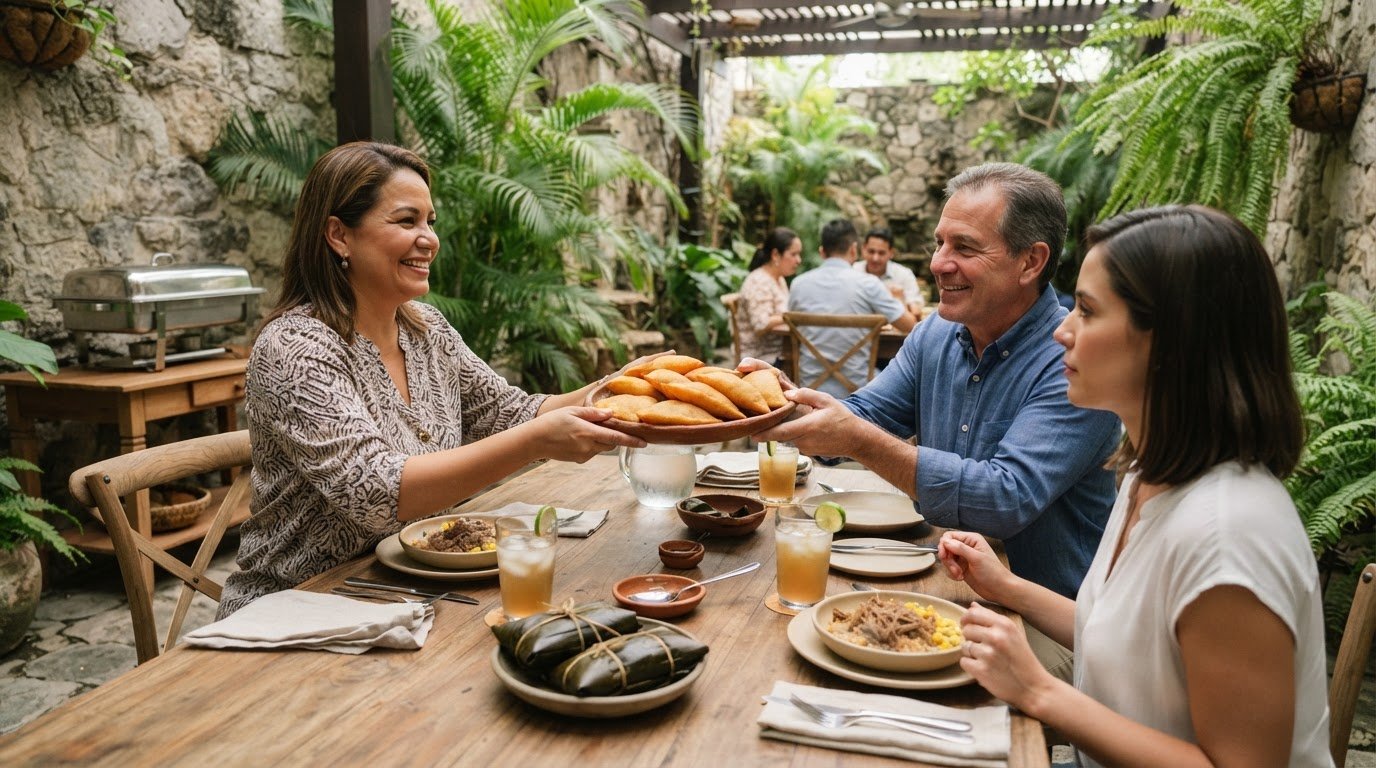
A polished client lunch is planned before the first plate arrives. Thoughtful client appreciation lunch catering brings together well-timed setup, appealing presentation, and a cleanup plan, with food guests can enjoy comfortably. When these details are handled with care, the meal feels welcoming without distracting from conversation.
The menu matters, but so does the experience around it. Plan the catering setup and cleanup, choose food with quality and presentation in mind, and create a lunch that feels warm and professional. Panamanian flavors, from savory empanadas to tropical drinks, can give the table a distinctive character. ¡Make every detail feel considered, from the first serving to the last!
Key Takeaways
- Plan the serving layout and cleanup as part of the event, so guests can focus on conversation instead of logistics.
- Choose food and presentation that feel inviting and suit the tone of your client lunch.
- Set your booking timeline around the event details, including the menu, guest count, and setup needs.
- Gather dietary needs in advance and plan suitable choices for vegetarian, vegan, gluten-free, and allergy-sensitive guests.
1. Event setup and cleanup
A clear setup plan keeps the room ready for conversation, rather than last-minute rearranging. Start with the guest count, lunch start time, serving style, and room layout. Decide where food, drinks, napkins, and waste bins will go. For example, keep refreshments away from the entrance so arriving guests can move easily into the room. Make the main table visible and leave enough space for guests to serve themselves without blocking the conversation area.
Set a schedule that gives the room time to look finished before guests arrive. One event account described a catering crew arriving 15 minutes early, with setup ready 30 minutes before the event. Treat those timings as an example, not a universal rule. The right schedule depends on the venue, menu, serving arrangement, and access to the room. Confirm who handles table placement, food presentation, and final checks before lunch begins.
Plan cleanup as carefully as setup. Decide in advance who will clear serving items, gather waste, and leave the room in good order. Keep bags and cleaning supplies out of sight during lunch, then assign clear tasks for the end. A tidy exit lets guests finish conversations without navigating empty trays or packaging. It also gives the host time to thank guests instead of managing logistics.
After the event, express thanks while the positive connection is still fresh. A brief note within 24 hours can mention a wonderful conversation, a guest’s effort, or a helpful idea to carry forward. For example: “Thanks for joining us today. Your perspective on the project gave us a useful way to move forward.” That personal detail links the meal to the relationship, rather than sending a generic thank-you. Good setup, thoughtful cleanup, and a specific follow-up make the lunch feel complete.
Food quality and presentation
For a polished client lunch, choose food that stays appealing during service. Match the menu to the schedule and setting. A short meeting may suit easy-to-serve portions, while a relaxed gathering can accommodate a fuller meal. Consider freshness, serving temperature, and how easily guests can eat while talking. Keep sauces, napkins, and serving utensils beside the dishes that need them. Thoughtful choices help guests enjoy the meal and focus on conversation.
Buffet service offers choices and encourages movement. Boxed lunches provide individual portions that are easy to distribute. Plated meals create a more structured experience, with each course served at the table. Choose the format that fits your room, schedule, and preferred level of formality.
Presentation starts with a clear table. Arrange dishes so guests can identify each option, and keep serving tools with the corresponding food. Use clean trays and serving dishes, and refresh the display as items run low. A bright garnish or neatly arranged portions can make a meal look inviting without elaborate decoration. Coordinate colors across the food, linens, and place settings for a restaurant-style touch. The table can feel celebratory while still suiting a business conversation.
For a lunch in Panama, food handling should follow applicable Panamanian food-safety requirements. Take care at every stage, from preparation to service. Keep food protected from contamination, use clean serving equipment, and help guests avoid mixing utensils between dishes.
Quality includes appearance, taste, and service that suits the occasion. A well-presented meal can make your gratitude feel sincere, not like a line on a card. Choose food guests can enjoy comfortably and let it add pleasure to the gathering.

3. How far in advance should I book lunch catering for a business event?
Plan once your event date, venue, and estimated guest count are settled. The right lead time depends on the menu, service style, event size, and venue access. A simple office lunch has different needs from a formal client gathering with several dishes and a specific room layout. Starting early gives you time to coordinate the details before invitations and schedules are fixed.
Begin by sharing the date, serving time, venue address, expected attendance, and meal format. A meeting with a short lunch break, for example, may need food ready for quick service. A relaxed appreciation gathering may allow a broader menu and a longer meal. These details help shape preparation, delivery, and setup. If the venue changes, update the plan promptly, since access and serving space can affect the event.
Menu choices also shape the plan. A focused selection is easier to coordinate than one with many options and individual requests. Gather dietary needs with the invitation, then share a clear summary alongside the expected guest count. If attendance is still changing, provide the current estimate and update it as plans firm up. Clear information helps prevent last-minute confusion about portions, presentation, and serving arrangements.
Use a simple planning sequence: secure the date and venue, choose the meal format, share guest and dietary details, then settle the final event plan. Leave room for changes in attendance or schedule. For instance, if a client meeting moves from a conference room to a shared office space, the serving layout may need adjustment. For client appreciation lunch catering, early coordination helps connect the menu with the occasion and gives each planning detail a place. The aim is not to book by an arbitrary deadline. It’s to begin when the essential event details are clear, then keep updates moving as decisions are made.
4. How can I accommodate vegetarian, vegan, gluten-free, and allergy-sensitive guests?
Start by collecting dietary needs with the invitation, then group them clearly. Separate vegetarian preferences from vegan choices, gluten-free needs, and specific allergies. According to the European Commission, offering vegetarian and vegan meals can serve guests who avoid meat or animal products. For example, a vegetarian meal may include dairy, while a vegan meal excludes animal products. That distinction helps prevent assumptions about what each guest can eat.
Share each requirement with the catering team in plain language. “No meat” is less precise than “vegetarian, dairy is acceptable.” For allergy-sensitive guests, name the specific ingredient and ask about ingredients and preparation practices. A guest avoiding peanuts needs different information from someone avoiding gluten. Be clear, and don’t describe a dish as safe for an allergy unless that can be established.
Make dishes easy to identify at the table. Label each one clearly, for example, “vegan,” “contains dairy,” or “made without gluten ingredients.” Keep serving utensils beside their matching dishes instead of moving them between trays. For a buffet, group dietary options separately and make them easy to spot. Mark boxed meals clearly. These steps help guests make informed choices without guessing from appearance.
For a business lunch, plan the menu around both inclusion and ease of service. A rice-based entrée with vegetables, for example, may suit some guests, but ingredients and preparation still matter. Confirm the final guest count and dietary notes together, then keep that information with the menu plan. If needs change, update the details before service. For a thoughtfully planned lunch that welcomes varied preferences, explore inclusive event catering.
At a planned gathering in someone’s home, guests traditionally bring the host a small gift. Keep dietary planning separate from that gesture: communicate needs clearly, and don’t assume a gift or the host’s menu choice addresses an allergy or another restriction. If you’re hosting, use the specific dietary notes when arranging food and identifying dishes. If you’re attending, share your requirements plainly so the host can consider them. Clear communication keeps the gift and meal distinct parts of the gathering.
Concolon Panamanian Street Food Restaurant: Event Catering
Concolon Panamanian Street Food Restaurant offers event catering for a client lunch with a taste of Panamanian street food. It’s a natural fit when you want the meal to feel warm and distinctive, rather than like another routine meeting. The menu can bring together Concolon, Panamanian Empanadas, and Corn and Meat Tamales, giving guests a chance to share dishes rooted in Panamanian food culture.
Concolon can be a distinctive option for a meal inspired by Panamanian street food. That comforting mix can anchor the meal, while empanadas and tamales add more traditional flavors to the table. Choose this catering for a business gathering where food can help welcome guests and make appreciation feel personal. Share your event details and menu preferences to start shaping the meal.
For your next client lunch, contact Concolon Panamanian Street Food Restaurant.
Make your next client lunch feel personal
A client lunch can do more than fill a break in the day. It can create an easy setting for conversation and give guests a warm taste of Panama. Choose a menu connected to your gathering, and let the food help set its character. Concolon, Panamanian Empanadas, and Corn and Meat Tamales bring distinct Panamanian flavors to the table.
With client appreciation lunch catering, shape the event around the people you’re welcoming. Consider what you want guests to take away, whether that’s relaxed conversation, a sense of celebration, or a memorable introduction to Panamanian street food. A thoughtful meal can make that experience tangible.
Contact Concolon Panamanian Street Food Restaurant to discuss event catering for your client gathering. Bring your ideas, and take the next step toward a lunch that feels warm, distinctive, and genuinely welcoming.
Frequently Asked Questions
What menu options work best for a professional client appreciation lunch?
Choose a menu that suits the meeting’s tone and makes the food clear to guests. Panamanian options can make the meal distinctive: Concolon combines rice, corn, beef or pork, and a blend of savory spices. Panamanian Empanadas and Corn and Meat Tamales offer additional traditional choices. Consider dietary needs and make ingredients easy to identify before settling the menu.
What are the catering delivery, setup, and cleanup fees?
Catering costs depend on the event details and are provided after a quote request. Factors can include the menu, guest count, and the setup or cleanup tasks involved. Ask for a clear outline of what the catering arrangement covers, including food service, room setup, and clearing the event space. This helps you understand the scope and plan your event budget without assuming those tasks are included.
What questions should I ask a caterer before booking a client appreciation lunch?
Before booking, discuss the menu, ingredient information, event arrangements, and the details to finalize. Clarify how the food will be presented, which setup or cleanup tasks are included, and how to share dietary requirements. Also provide information about the venue and schedule. Clear communication helps align the meal with your guests and event plan.
Leave a Reply